
Straight answersbefore you send a part.
What to send, how quoting works, which materials we print and how aviation cabin parts are released. If your question is not here, ask an engineer directly.
The fastest quotes startwith five details.
You do not need to choose a process or material first. Tell us what the part does and we recommend the route.
- The part. A CAD file, a drawing, or photos with key dimensions. The old part works too.
- What it does. Where it is installed, the loads, temperatures or chemicals it sees.
- How many. One replacement, a first batch, or expected yearly demand.
- When you need it. The date the part has to be in your hands.
- Finish and paperwork. Colour, inserts, inspection report or release documents.
Gettinga quote.
How quoting works, what it costs you to ask, and what we need to price a part properly.
What should I send to get a quote?
Send a CAD file or drawing, the quantity, what the part does and the date you need it. Add material, colour and documentation requirements if you know them. Photos with key dimensions are enough to start.
Do I need a CAD file?
No. A drawing, photos with dimensions, or the physical part is enough. If there is no CAD, we scan the part and build the model for you.
What happens after I send an enquiry?
An engineer reviews it and replies with price, process, material and delivery date. If a part needs scanning, design work or an approval route first, we tell you what is missing.
Can you make a single part?
Yes. Many orders are one-off replacements or a first sample before a batch. 3D printing has no tooling cost, so small quantities stay economical.
Do you handle production batches?
Yes. We produce end-use parts from one to a few hundred, repeatable from the same digital file whenever you reorder.
Do I need to choose the printing process?
No. Tell us what the part has to do. Our engineers recommend the process, material and finish, and explain why.
Can you make every part I send?
No. Geometry, material, operating conditions and approval requirements decide whether 3D printing suits a part. If it does not, we say so at the quote stage rather than after you have paid for a sample.
Filesand data.
Which formats work, how your drawings are protected, and what happens when there is no data at all.
Which file formats do you accept?
STEP or STL for 3D data, PDF for drawings, and JPG or PNG for photos. The enquiry form takes up to five files and 20 MB in total. If your data is in another format or larger, email it and we will tell you if we can use it.
Are my drawings and CAD kept confidential?
Yes. Files you send are used only to assess and make your part, and are shared only with the people who need them to do that work. If your organisation needs a non-disclosure agreement, tell us before you send data. See our privacy policy.
I only have the old part. Can you still help?
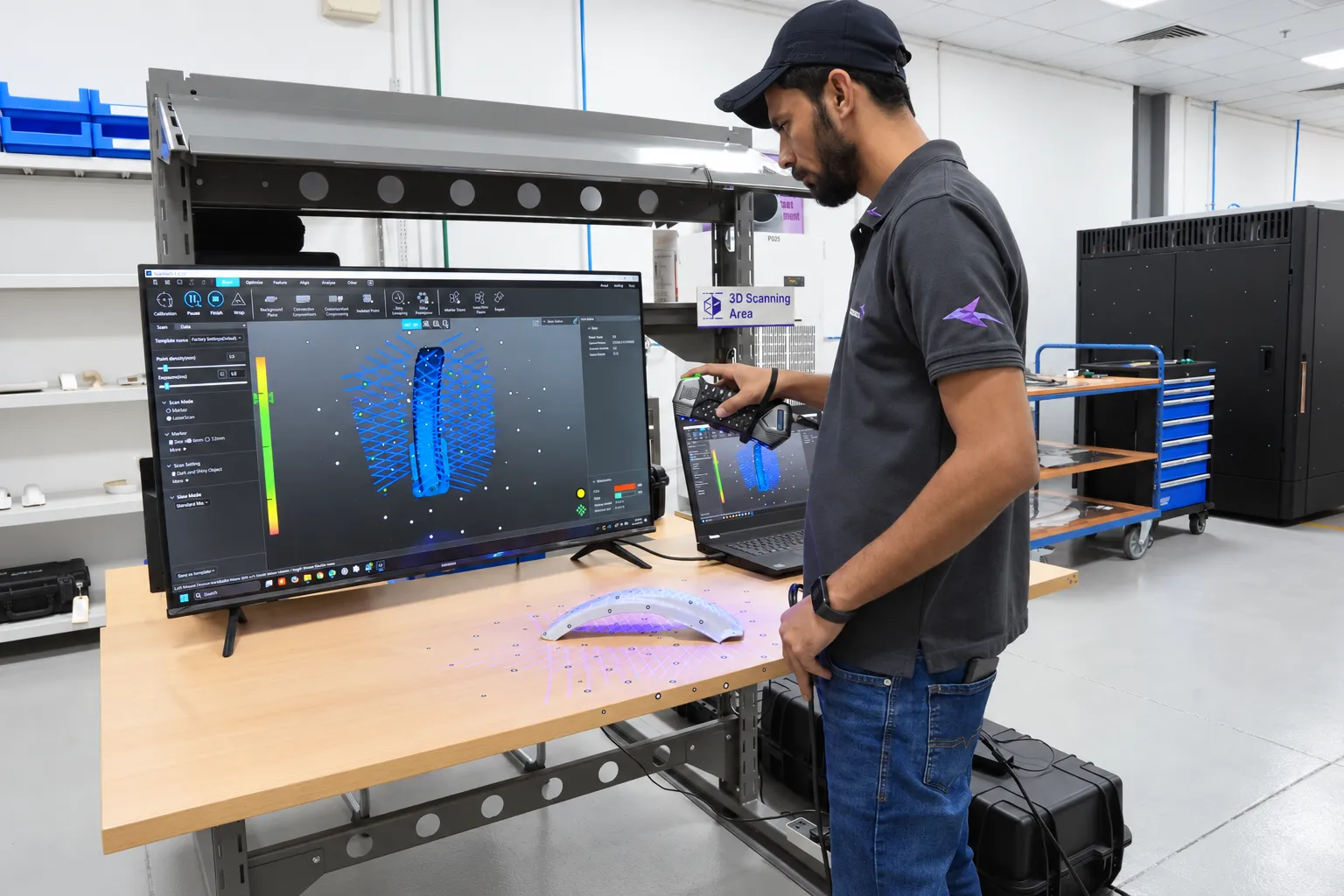
Yes. We scan it with metrology-grade 3D scanners and rebuild it as clean CAD. Its condition matters: a worn or broken part may need engineering judgement to restore the original intent.
How accurate is your 3D scanning?
Our Creaform HandySCAN 3D BLACK and SCANOLOGY NimbleTrack Gen2 are rated up to 0.025 mm, and the SCANOLOGY SIMSCAN up to 0.020 mm, as stated by the manufacturers. Achieved accuracy depends on the part size, surface and set-up.
Can you scan large parts?
Yes. The SCANOLOGY NimbleTrack Gen2 is a wireless tracked system with up to 4.2 m tracking distance, suited to large parts and assemblies. Tell us the part size when you enquire.
Can you redesign a part for 3D printing?
Yes. We adapt designs to suit the process, for example combining assemblies to remove joints and fasteners, or placing material only where the part needs it, while keeping the interfaces it has to meet.
Materialsand processes.
Three industrial processes and 38 polymers and alloys, all run on our own machines in Jebel Ali.
Which 3D printing processes do you run?
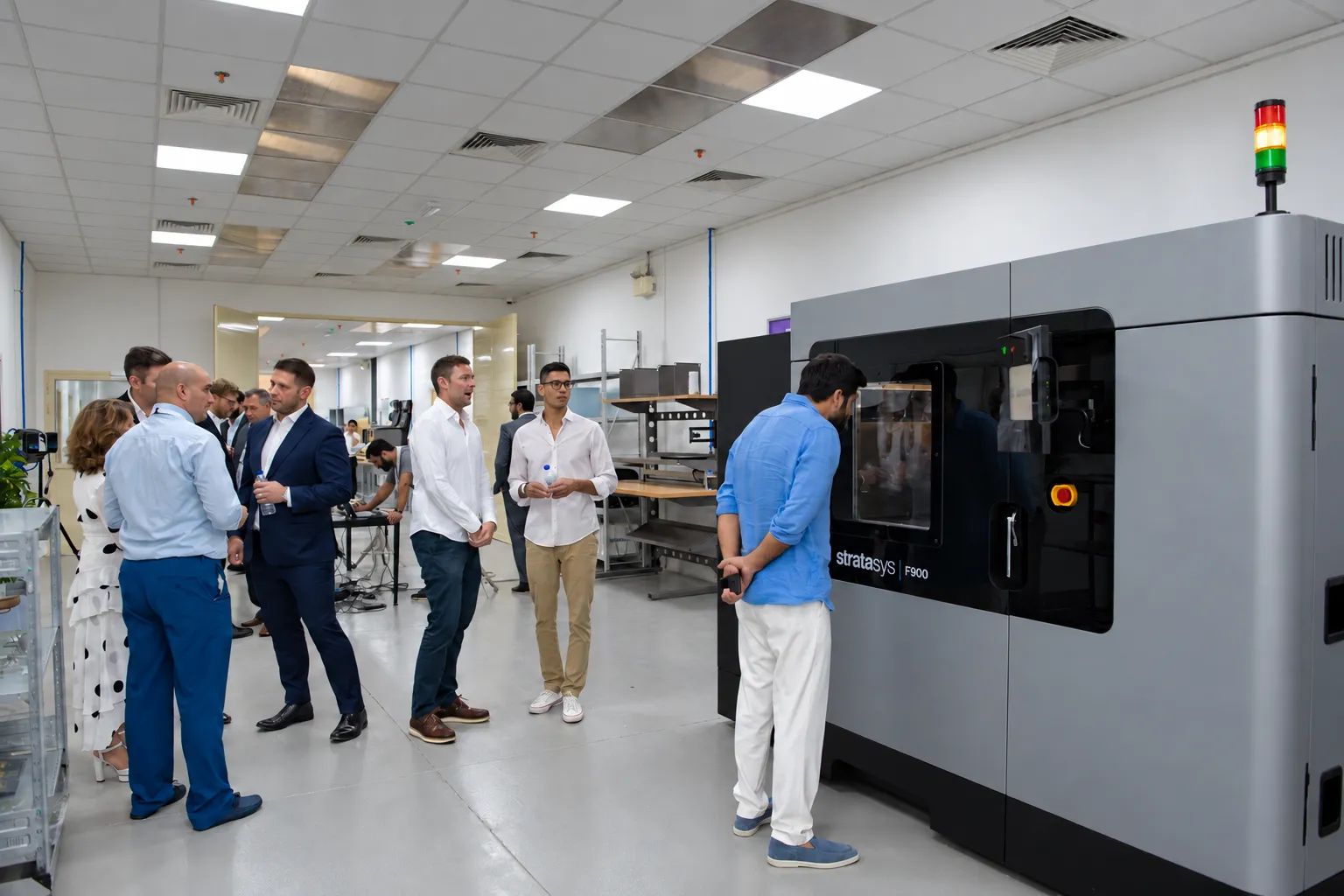
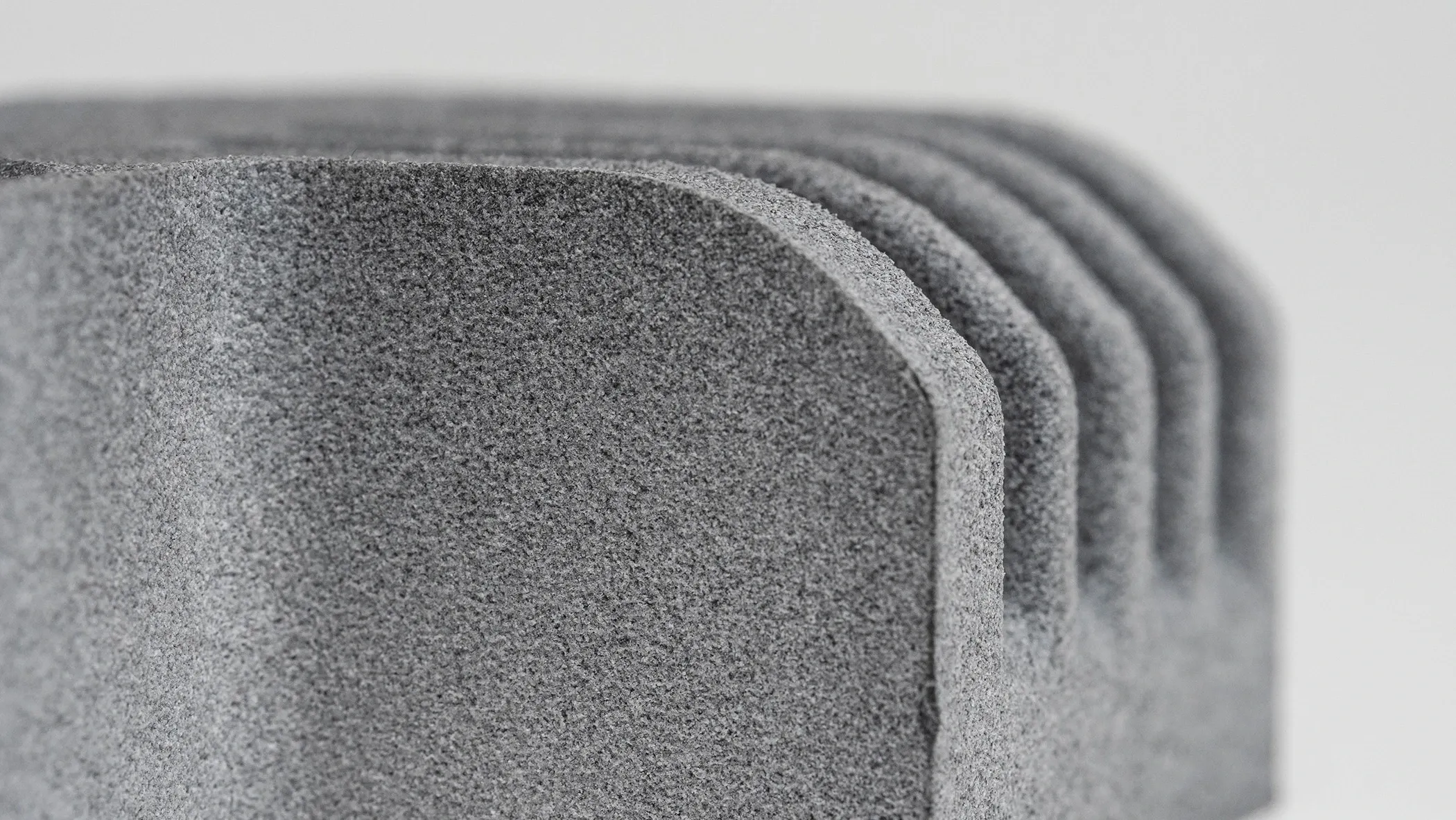
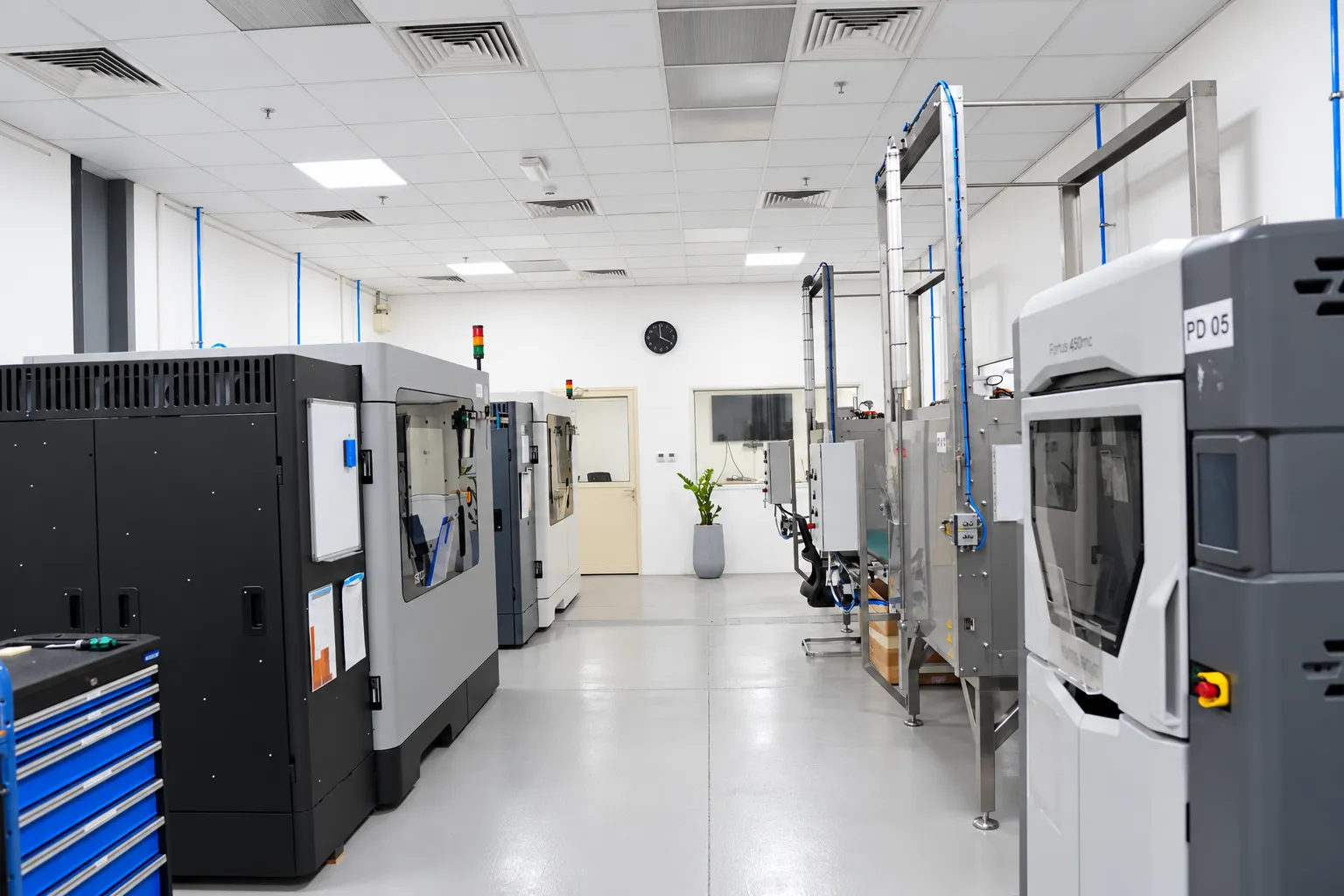
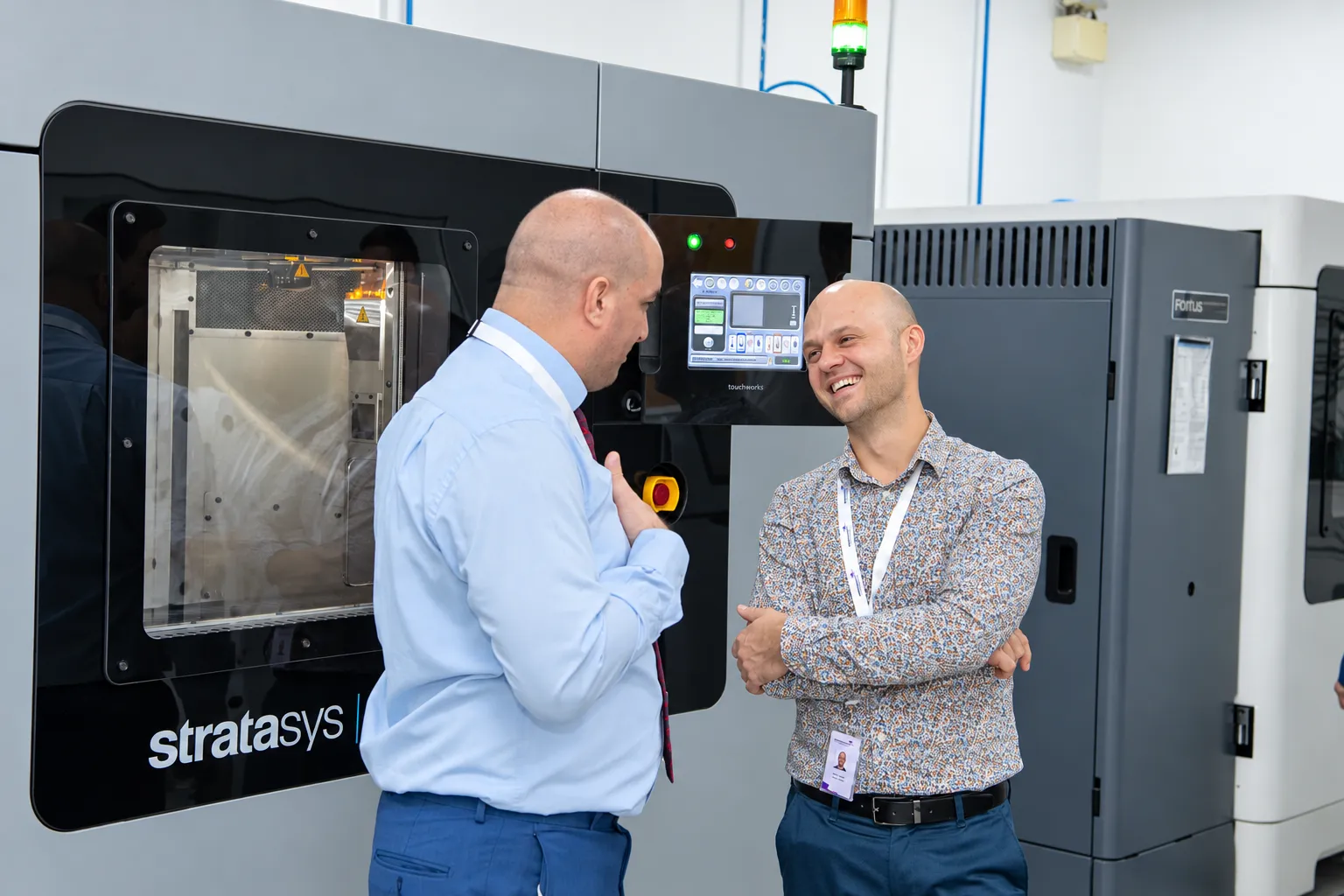
FDM on a Stratasys F900 and Fortus 450mc, SLS on an EOS P 396, and metal laser powder bed fusion on an Eplus3D EP-M300. All four systems run in-house.
Do you print in metal?
Yes. The Eplus3D EP-M300 prints stainless steel, titanium, aluminium, nickel alloys, cobalt chrome, maraging steel and copper alloys, with a 300 × 300 × 450 mm build volume.
What is the largest part you can print?
Up to 914 × 610 × 914 mm in one piece on the Stratasys F900. SLS builds up to 340 × 340 × 600 mm and metal up to 300 × 300 × 450 mm.
How do I choose the right material?
Tell us the temperature, loads, chemicals and any flame or smoke requirement the part must meet. We recommend from 18 FDM, 13 SLS and 7 metal options, and you can compare them in the materials library.
Do you have flame-retardant materials?
Yes. Options include ULTEM 9085 and PA6/66-GF30-FR on FDM, and PA 2210 FR, PA 2241 FR and ALM FR-106 on SLS. Whether a material meets your specific requirement is assessed for each part.
How accurate are printed parts?
The F900 is rated at ±0.089 mm by Stratasys. Achieved tolerance depends on geometry, material and build orientation, so we state what is realistic for your part in the quote.
Is every material in the library always in stock?
The library is a reference. We confirm grade availability and suitability for your part when we quote.
Finishingand inspection.
Parts leave ready to fit, with the checks and records your order calls for.
Can you paint and assemble parts?
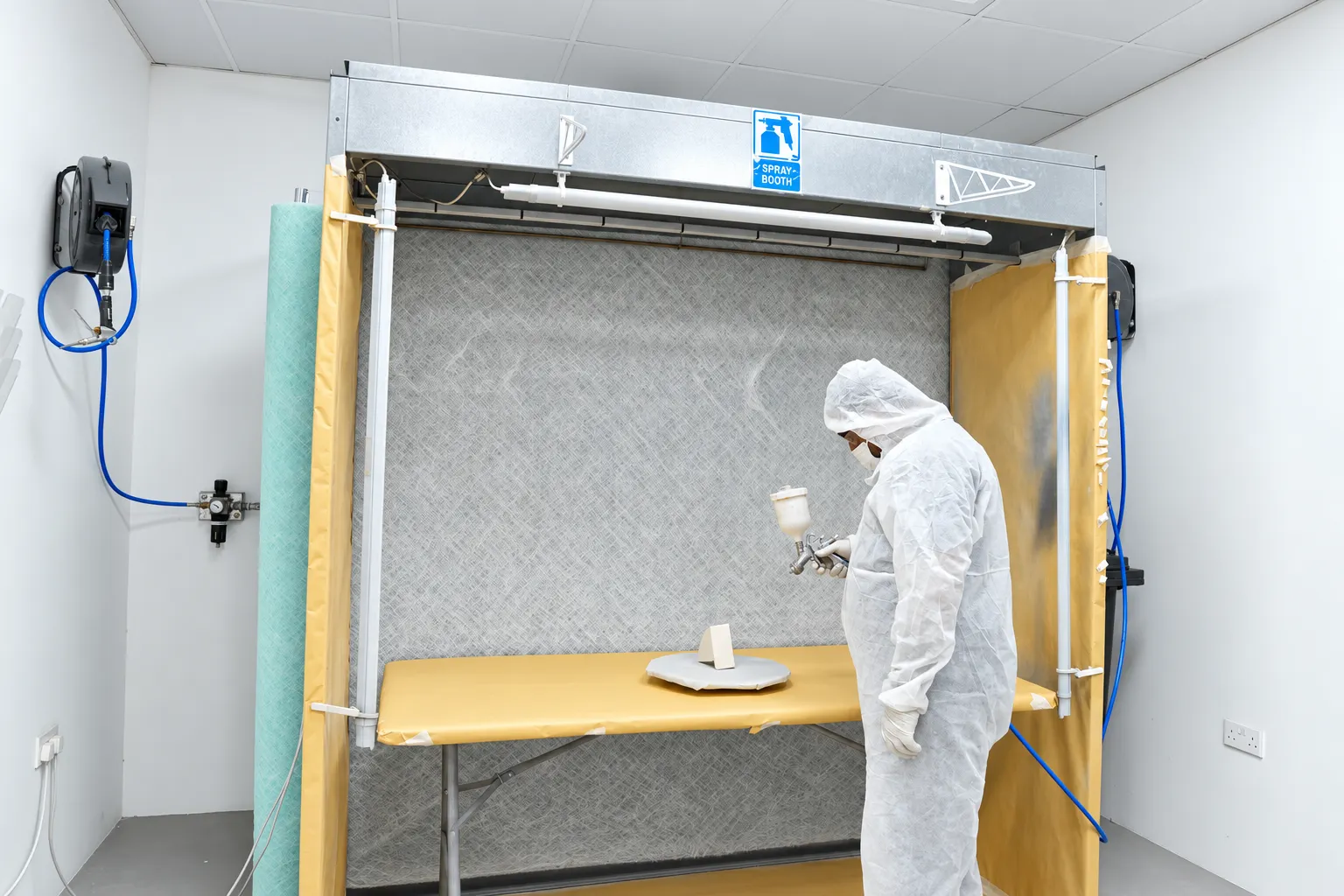
Yes. We sand, prime and paint to colour standards, fit threaded inserts and assemble sub-components before delivery.
Can you match a colour or paint specification?
Yes. State the colour reference or paint specification in your enquiry, together with any texture or gloss requirement, and we include it in the quote.
How do you inspect parts?
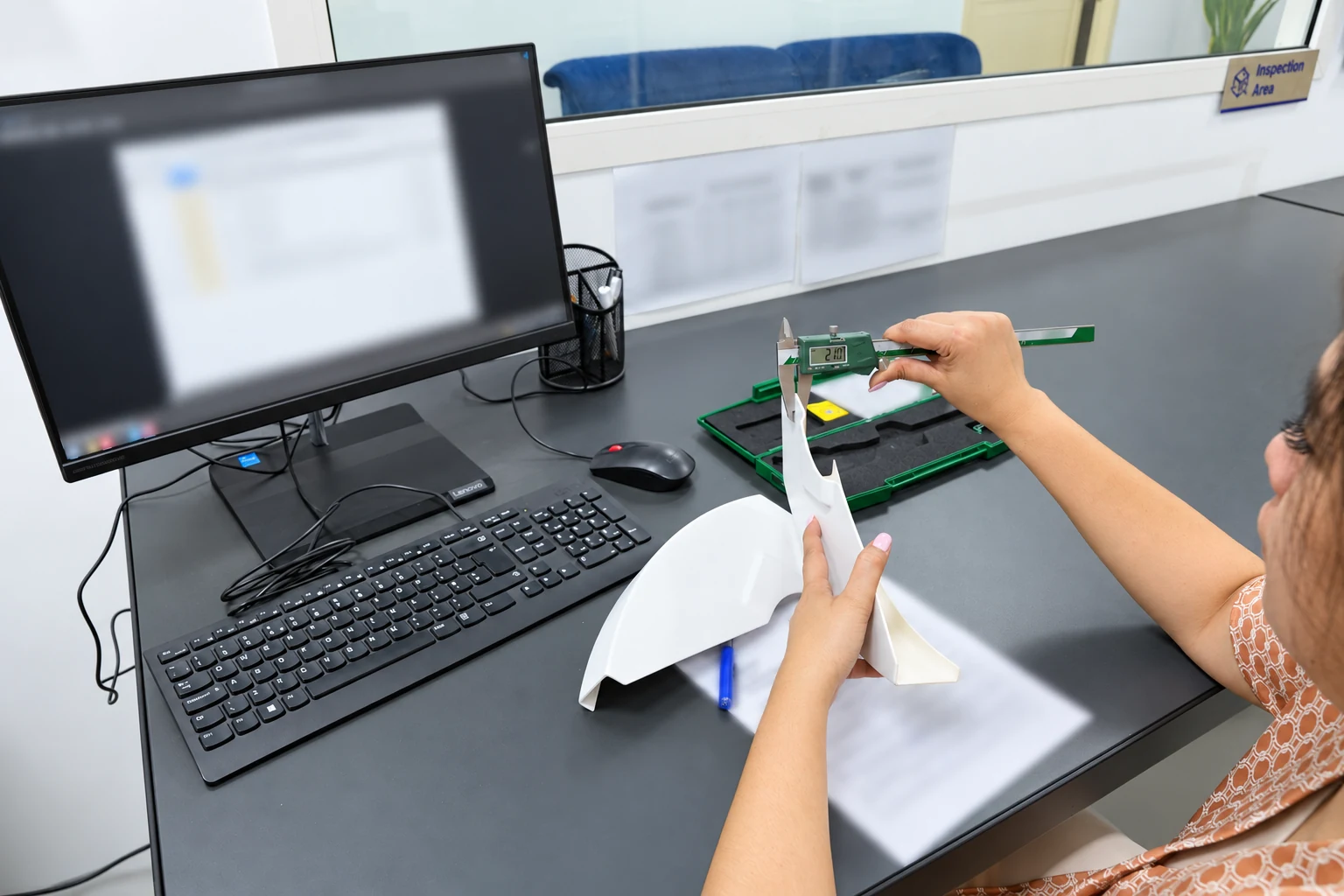
We check dimensions against your drawing or CAD, using our metrology-grade 3D scanners where a full-surface comparison is needed. Results are recorded and travel with the part.
Can I get an inspection report with my parts?
Yes. Tell us the inspection and documentation you need when you request the quote, so it is planned and priced from the start.
Which quality management system do you work to?
Our quality management system is certified to ISO 9001:2015 (Paradigm For 3D Printing Products Production L.L.C., certificate 01 100 2622672) for component design and manufacturing using additive and conventional technologies, 3D scanning, metrology and engineering services. View the certificate
Aviation partsand EASA Form 1.
Cabin interior parts made in Dubai and released through an approved production route.
Which aircraft parts do you make?
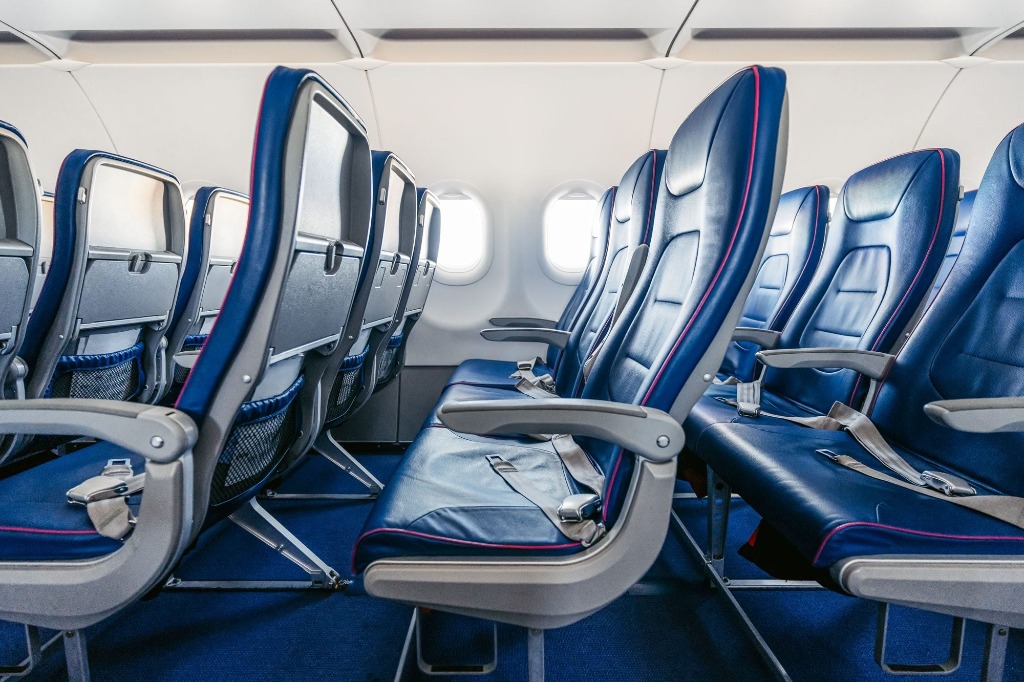
Polymer cabin interior and seat components, such as light bezels, IFE shrouds, business class shrouds and life vest pouch assemblies.
Can parts be supplied with EASA Form 1?
Yes, for eligible parts. Paradigm 3D manufactures them under a production arrangement with The Aviation AM Centre, the EASA Part 21G approval holder, which issues EASA Form 1 for parts supplied through that approved route. View the approval
Do you hold GCAA approval?
Application in progress. We have applied for GCAA CAR 21G production organisation approval; it has not yet been granted.
Does a scan or prototype make a part approved for installation?
No. Scans and prototypes support development, but a part for installation must follow the applicable design, production and release requirements.
What should I send for a cabin replacement part?
The part number and name, aircraft type, CMM or assembly information, photos, quantities and required date. Add the colour or paint specification and the release document you need.
Can we reorder the same cabin part later?
Yes. Once the configuration and supply route are established, repeat orders use the same controlled data. We confirm quantity, finish, delivery and release documents for each order.
Deliveryand logistics.
Made in Jebel Ali, so delivery is planned on our own production floor, not around freight and customs.
When will I get a first sample?
The sample date is agreed in your quote. Parts that need scanning, design work or certification are scheduled with you at the quote stage.
What decides the delivery date?
Quantity, material, build time and finishing. Delivery dates are confirmed per order in your quotation.
Where are parts made?
In our 10,750 sq ft additive manufacturing facility in Jebel Ali Industrial Area, Dubai. Producing locally avoids import lead times and customs delays.
Which documents come with delivery?
The inspection and release records your order requires. Eligible aviation parts supplied through the approved route ship with EASA Form 1 issued by the approval holder.
Can you hold my parts digitally for repeat orders?
Yes. Once a part is proven, its file is the stock. You reorder when demand appears instead of holding physical inventory.
Can I visit the facility?
Yes, by appointment. Contact us to arrange a visit to see the machines and discuss your parts with our engineers.
Still have a question?Ask the people who make it.
You reach an engineer, not a call centre. Choose the channel that suits you.
Bring us the part.
Send a drawing, a CAD file, or photographs and the old part. Tell us what it does, how many you need and when.