
Obsolete components
Recreate discontinued parts from existing samples or technical data, without recreating the original casting patterns or production tooling.
Industries
Parts and tooling for sectors where downtime is expensive and paperwork matters.
All industries AviationCabin interior parts released with EASA Form 1.
 MaritimeReplacement parts and tooling that keep vessels running.
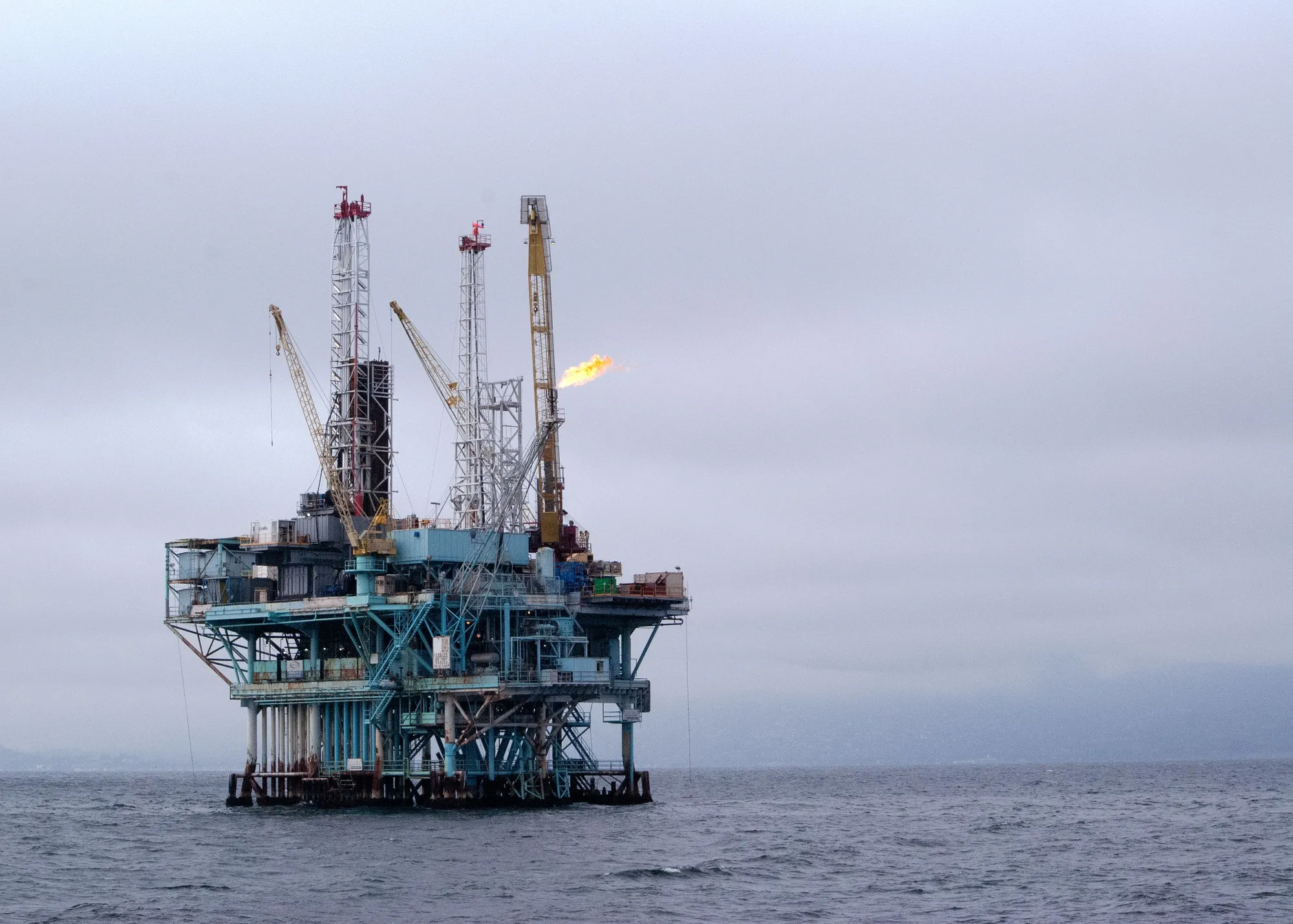 Oil & GasObsolete components rebuilt in polymer and metal.
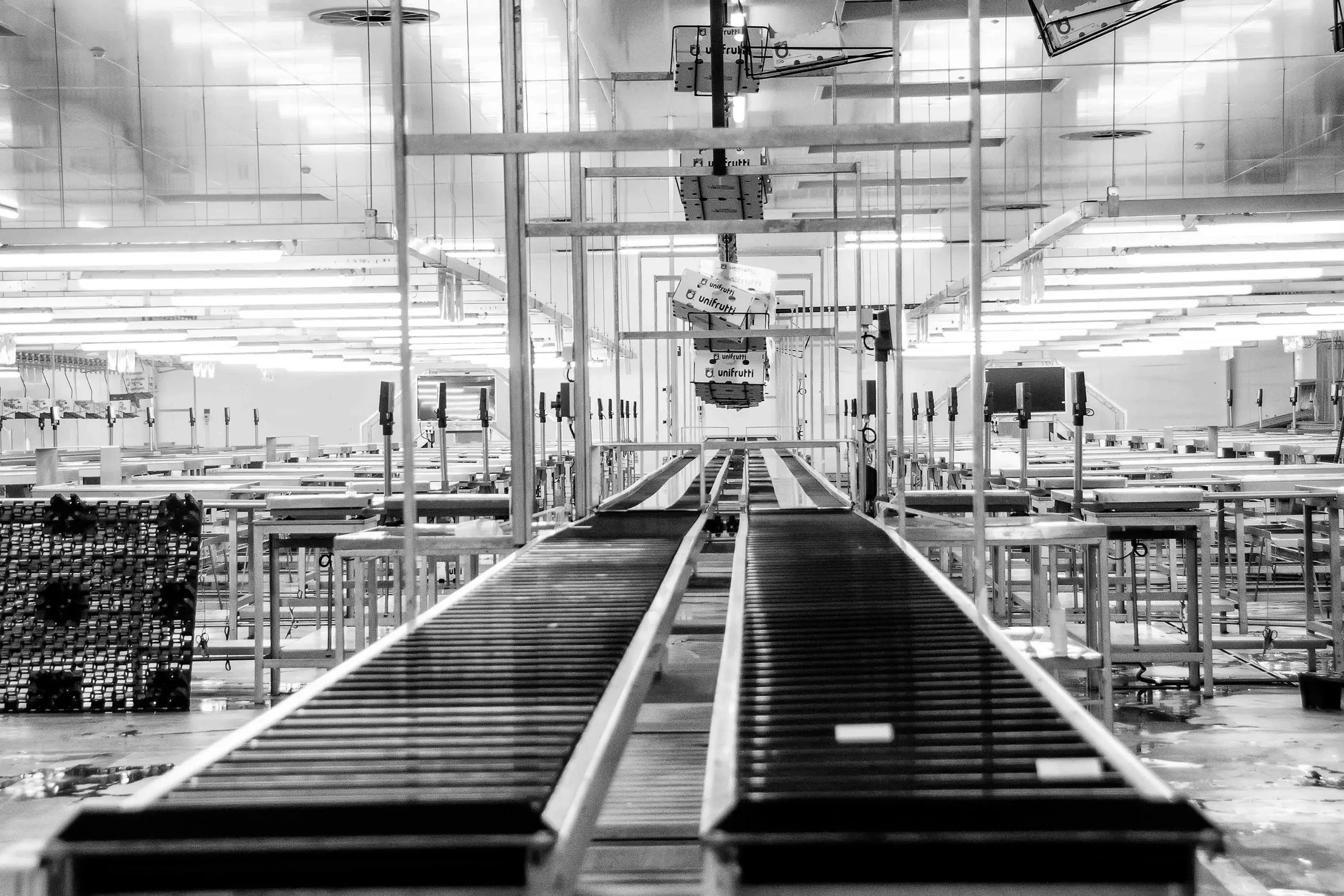 Industrial ManufacturingJigs, fixtures and end-use parts for the factory floor.
 Aerospace & DefenceControlled, local manufacture for sensitive programmes.
Company
A 10,750 sq ft additive manufacturing facility in Jebel Ali, Dubai, since 2023.
About Paradigm 3D
Keep serviceable equipment operating when spare parts become a supply bottleneck. We help oil and gas operators and maintenance providers recreate unavailable components, assess replacements for obsolete designs, and establish repeat local supply, reducing dependence on overseas sourcing and large minimum orders.
A single unavailable component can delay maintenance or lead to replacing an otherwise serviceable assembly. We combine reverse engineering and additive manufacturing to assess alternative supply options and produce components around your equipment requirements.
Recreate discontinued parts from existing samples or technical data, without recreating the original casting patterns or production tooling.
Explore local production for spares that are difficult to source, with quantities aligned to maintenance needs rather than large production runs.
Produce intricate internal passages and integrated features, creating opportunities to simplify assemblies and develop designs beyond conventional manufacturing constraints.
Working with oil and gas consultant 3D Energy and technology partner Eplus3D, we reconstructed an existing valve cage and produced it by metal additive manufacturing.


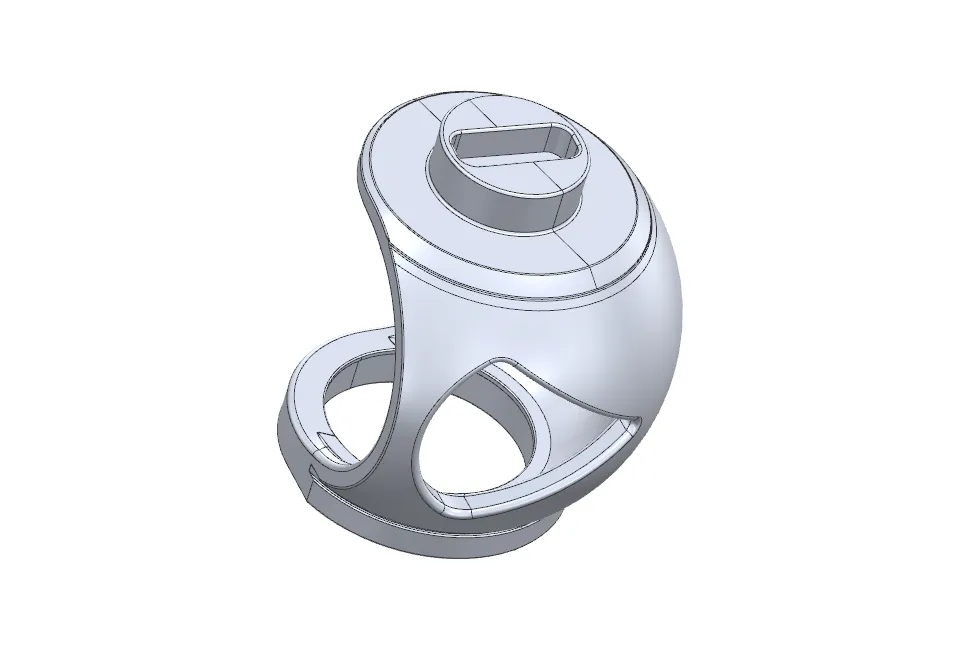
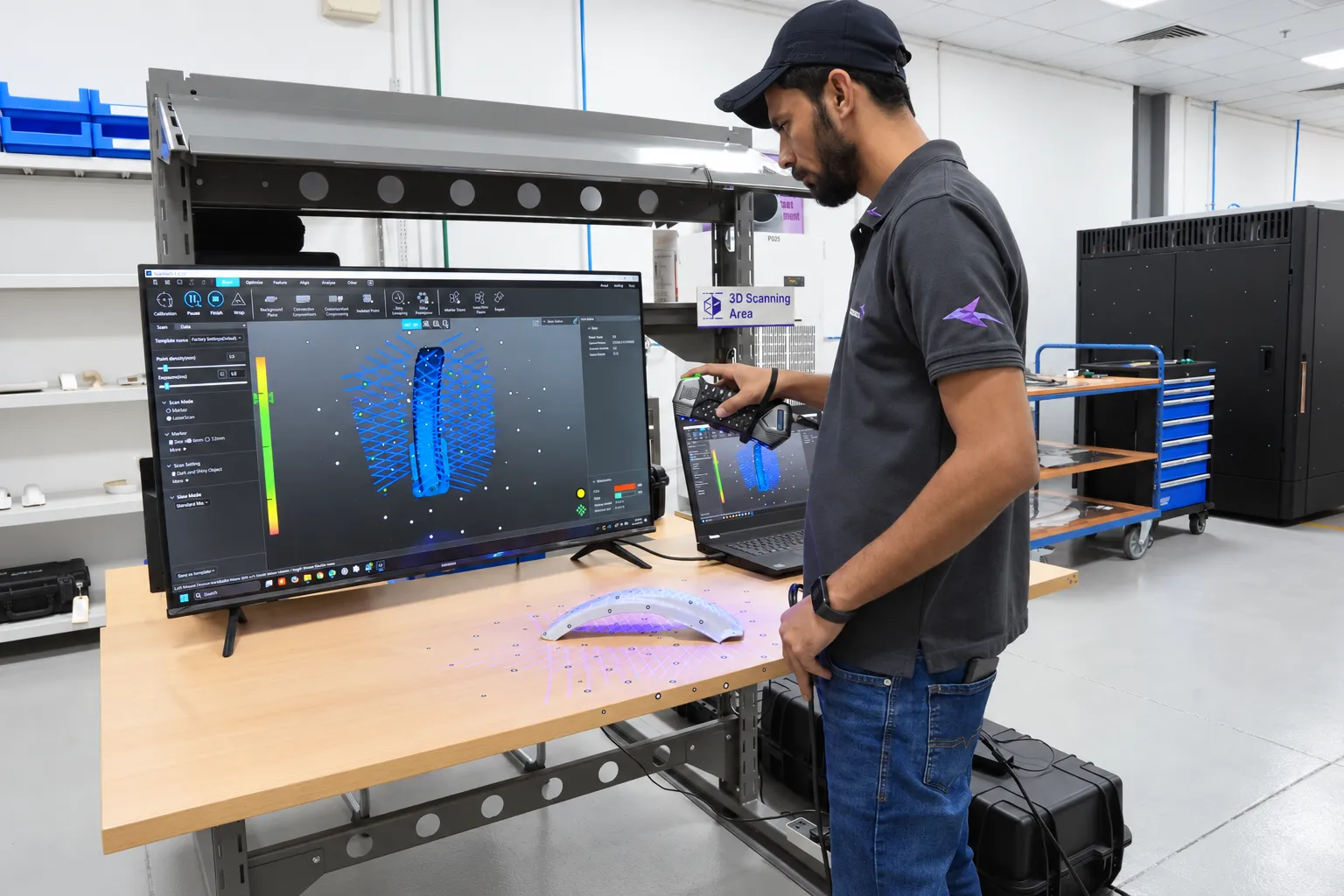
Most legacy parts arrive without usable data. We capture the original, rebuild it as engineering CAD and prove the new geometry against the scan before metal is committed.
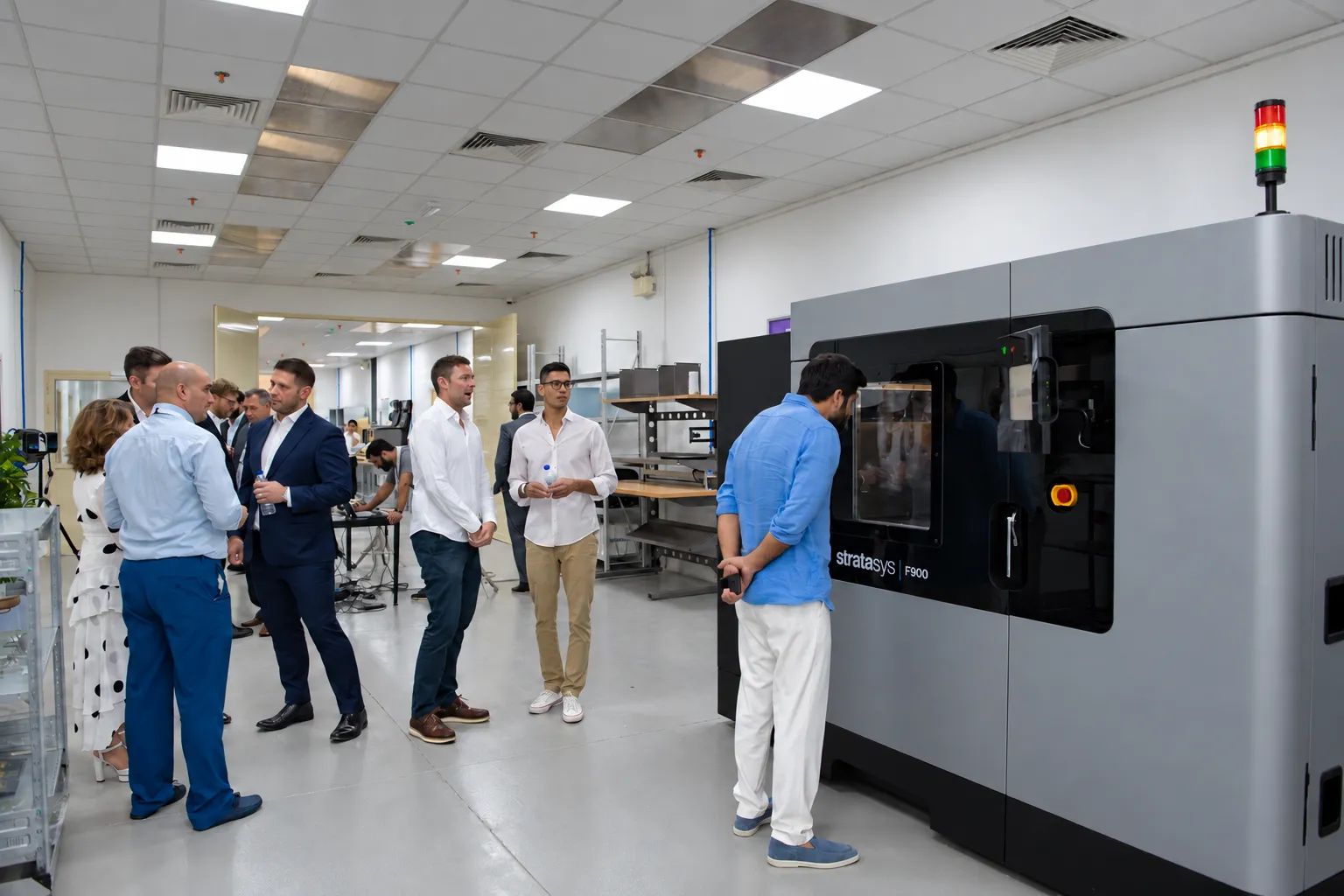
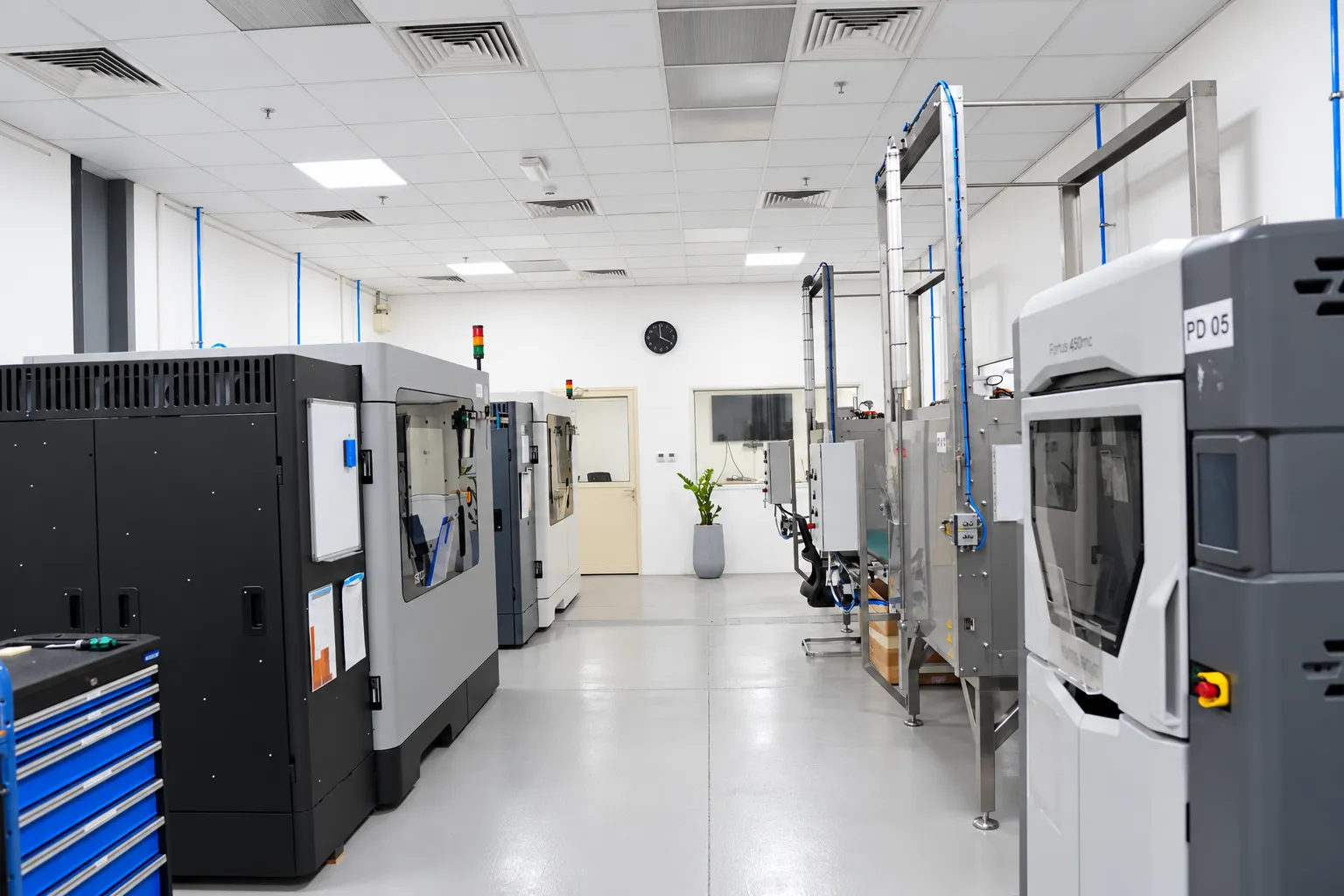
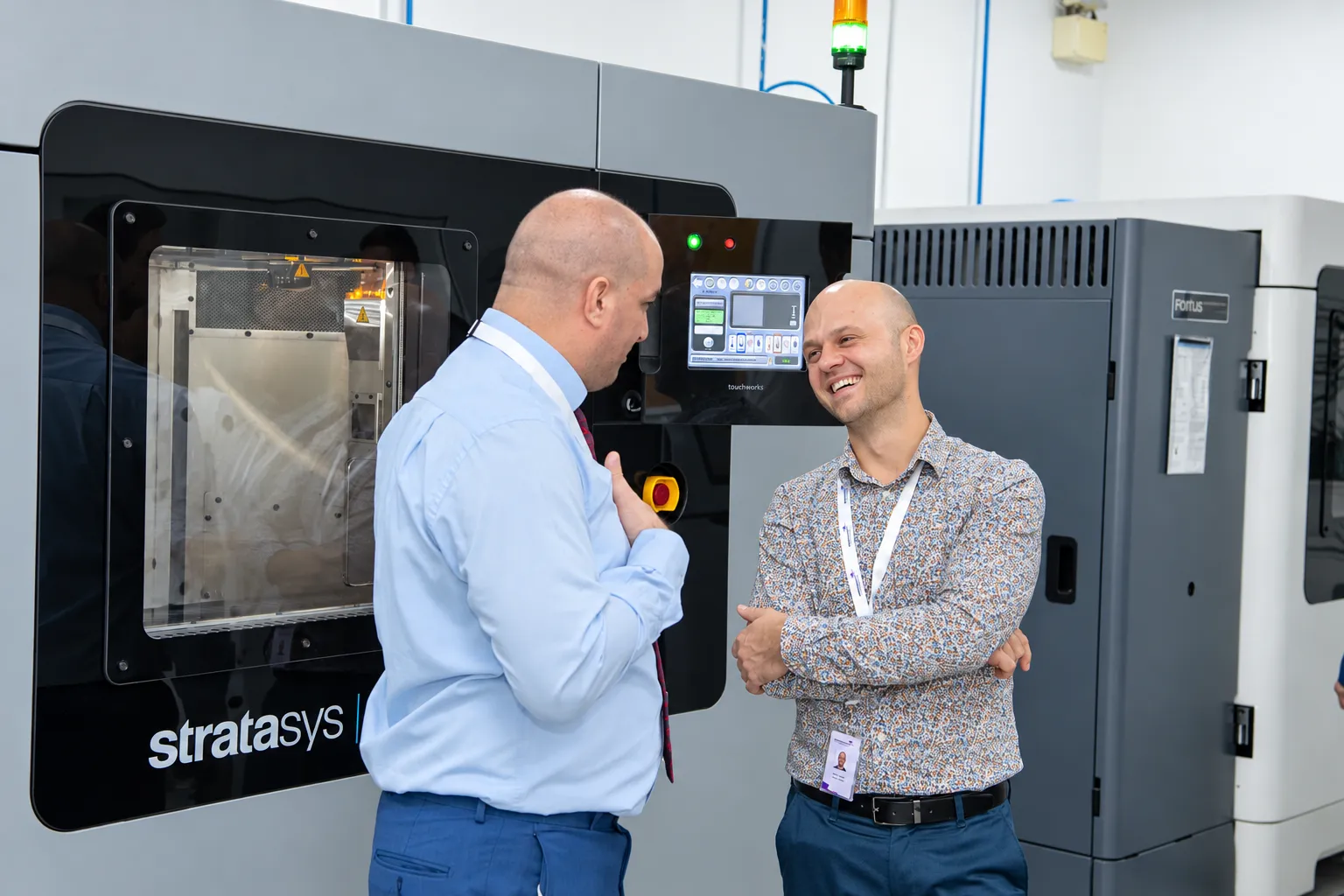
Large-format FDM, production FDM, polymer SLS and metal powder bed fusion. All four are owned and run in Jebel Ali.
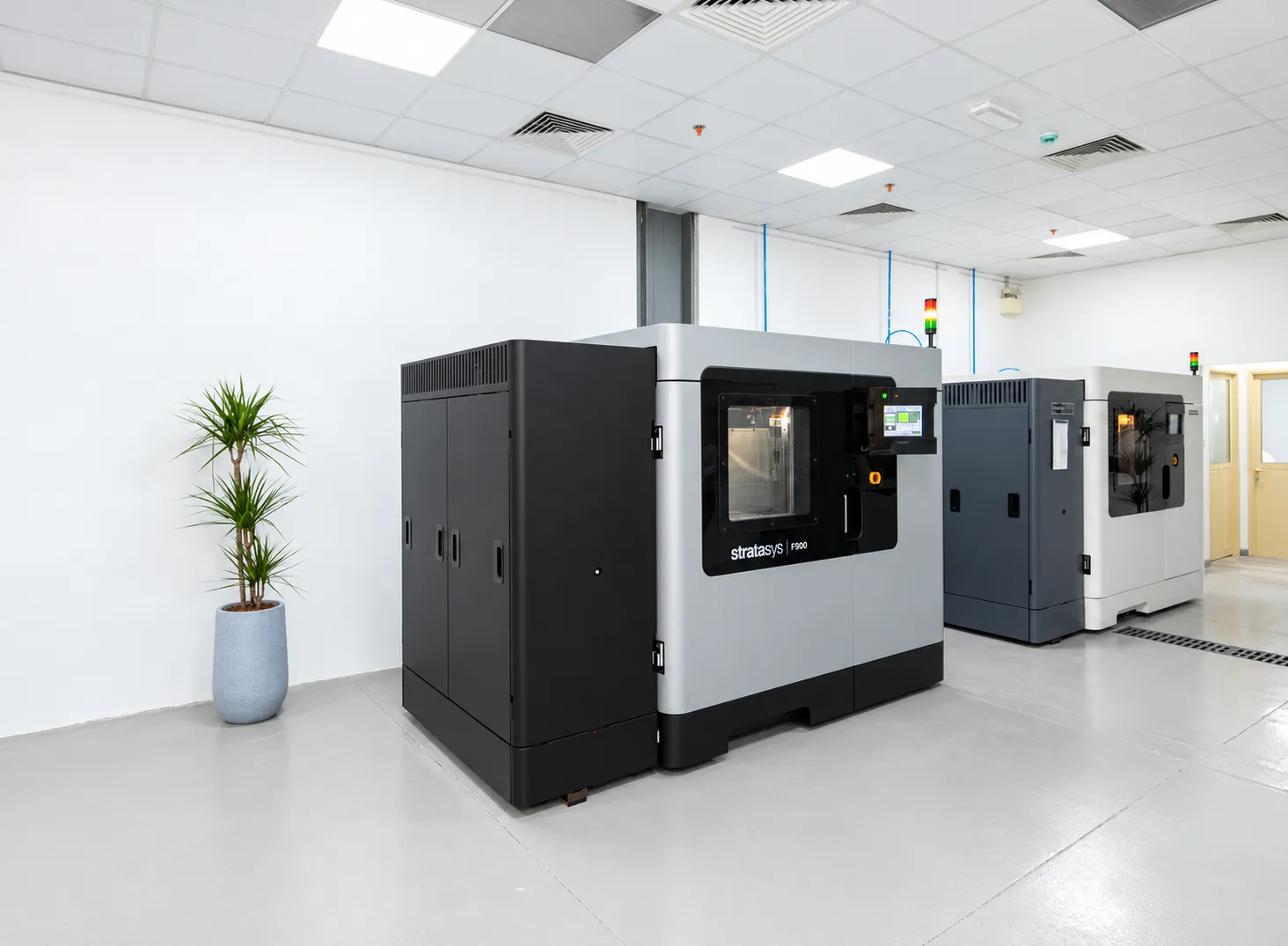 More about the Stratasys F900
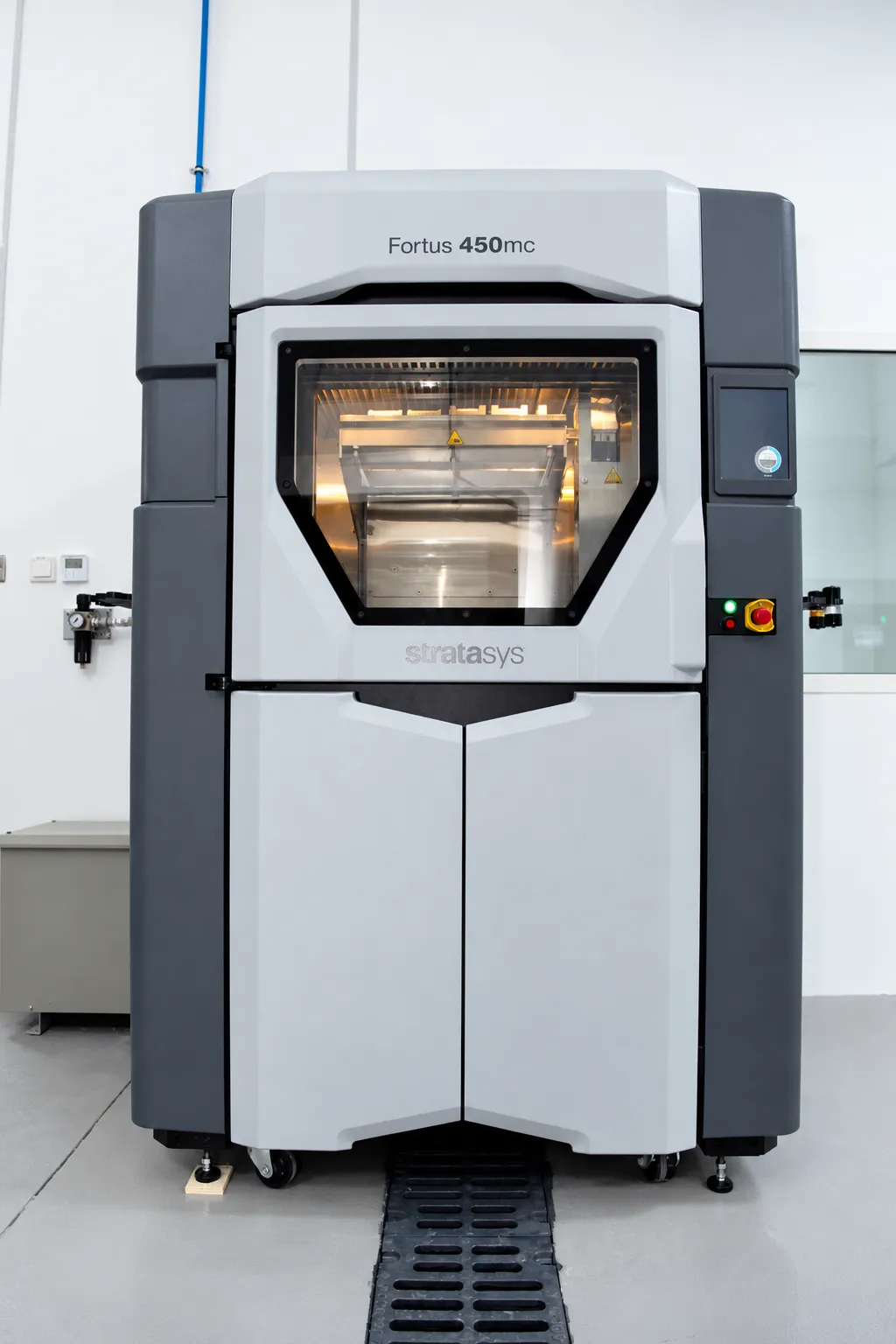 More about the Stratasys Fortus 450mc
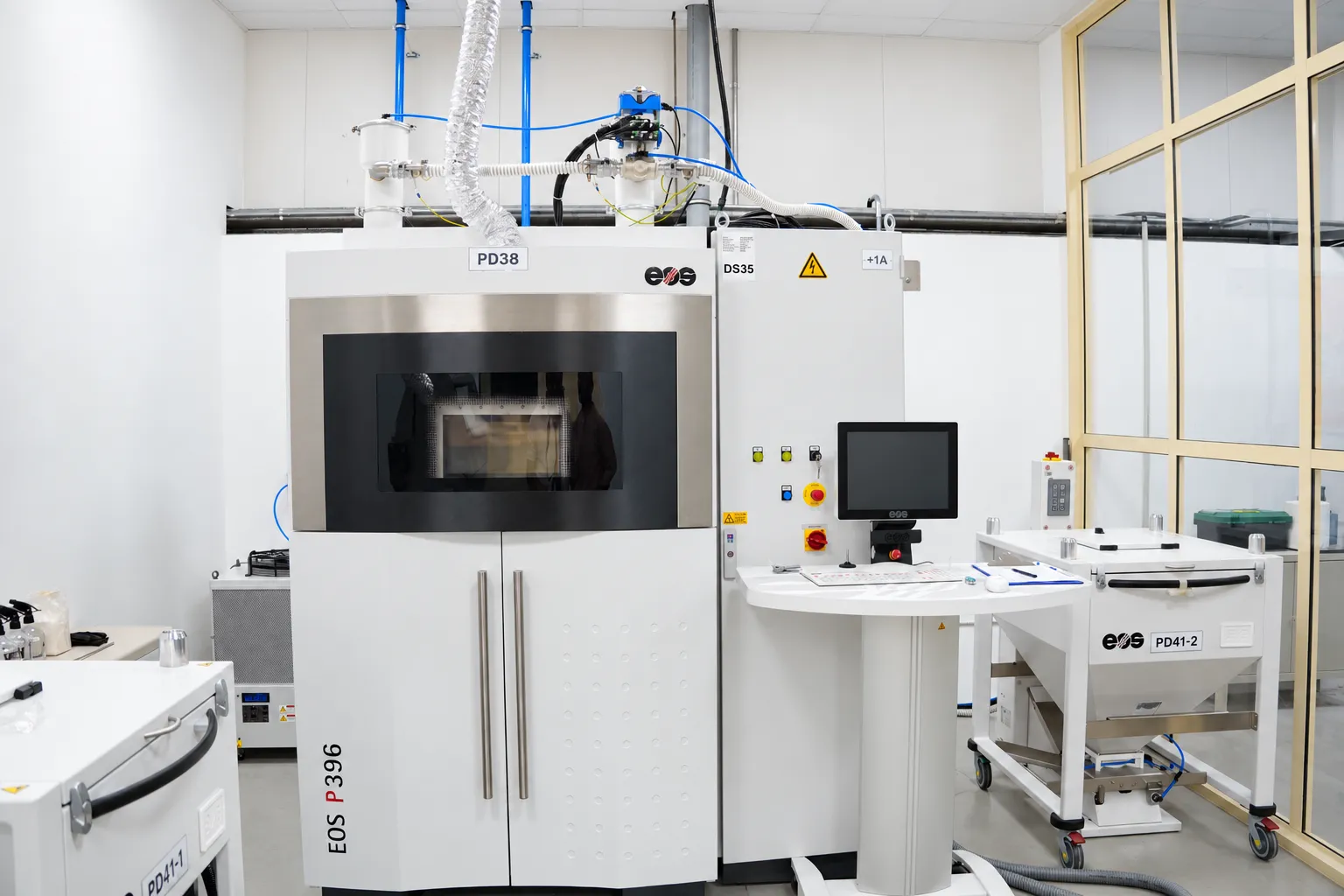 More about the EOS P 396
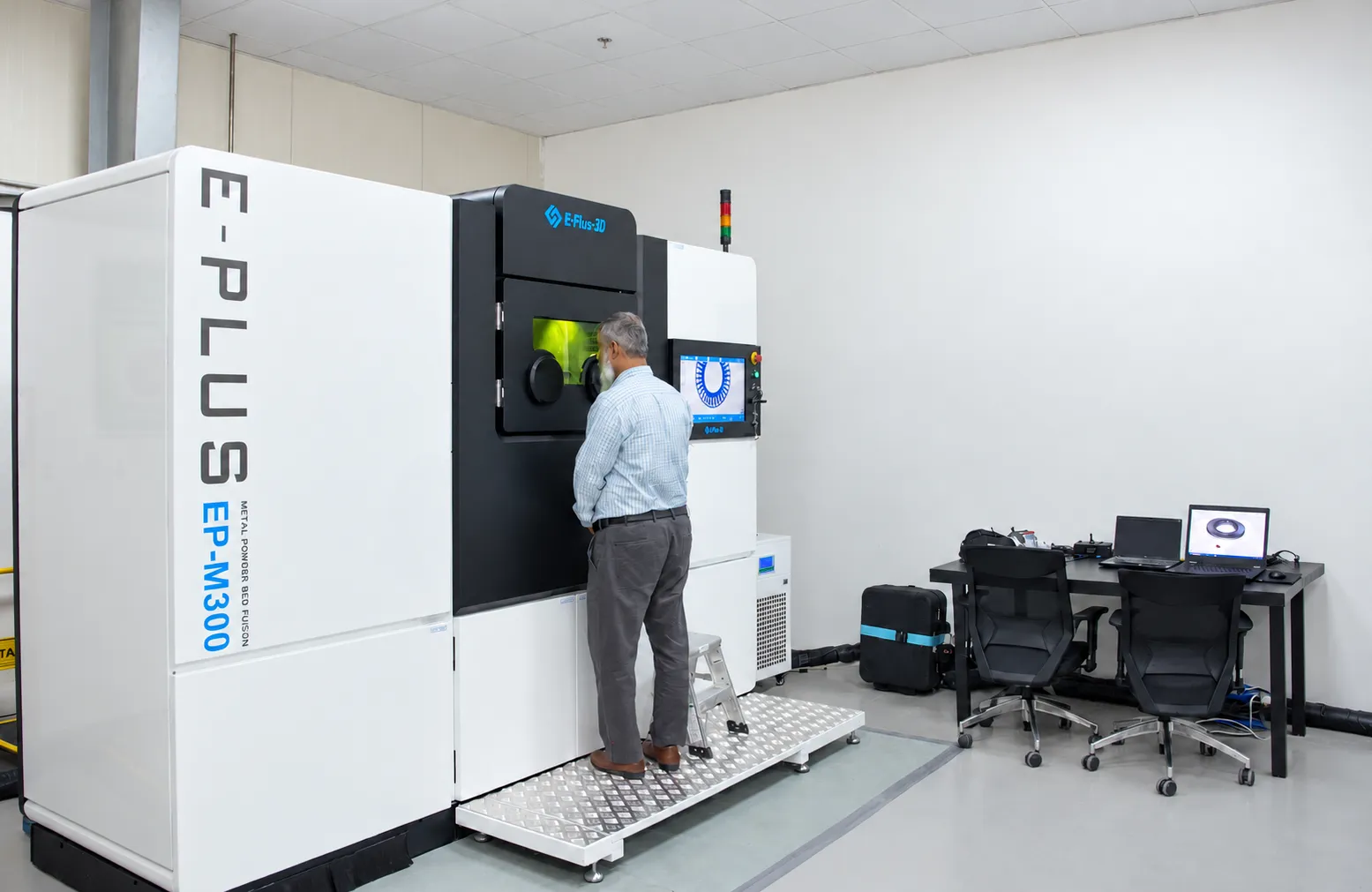 More about the Eplus3D EP-M300
Large format polymer manufacturing for functional end parts, production tooling, and prototypes. Produce larger parts in one piece, reducing the need for splitting and assembly.
Available materials include ULTEM 9085, Nylon 12CF, ASA and more.
More about the Stratasys F900* Build envelopes are given as X × Y × Z.
Materials libraryWe start from the service conditions and the current material specification. The alloy or polymer, the build route and the testing are planned as one scope.
| Service condition | What we need to know | Why it matters |
|---|---|---|
| Temperature | Continuous and peak temperature, thermal cycling | Sets the alloy family or rules out polymers |
| Pressure and load | Operating pressure, mechanical and cyclic loads | Drives wall thickness, build orientation and testing |
| Process media | Hydrocarbons, water, H₂S, chemicals and cleaning agents | Defines corrosion and chemical resistance needs |
| Current specification | Original material, grade and any standards cited | Gives the baseline the replacement is measured against |
| Location | Hazardous area, offshore or indoor service | Affects qualification, documentation and approval steps |

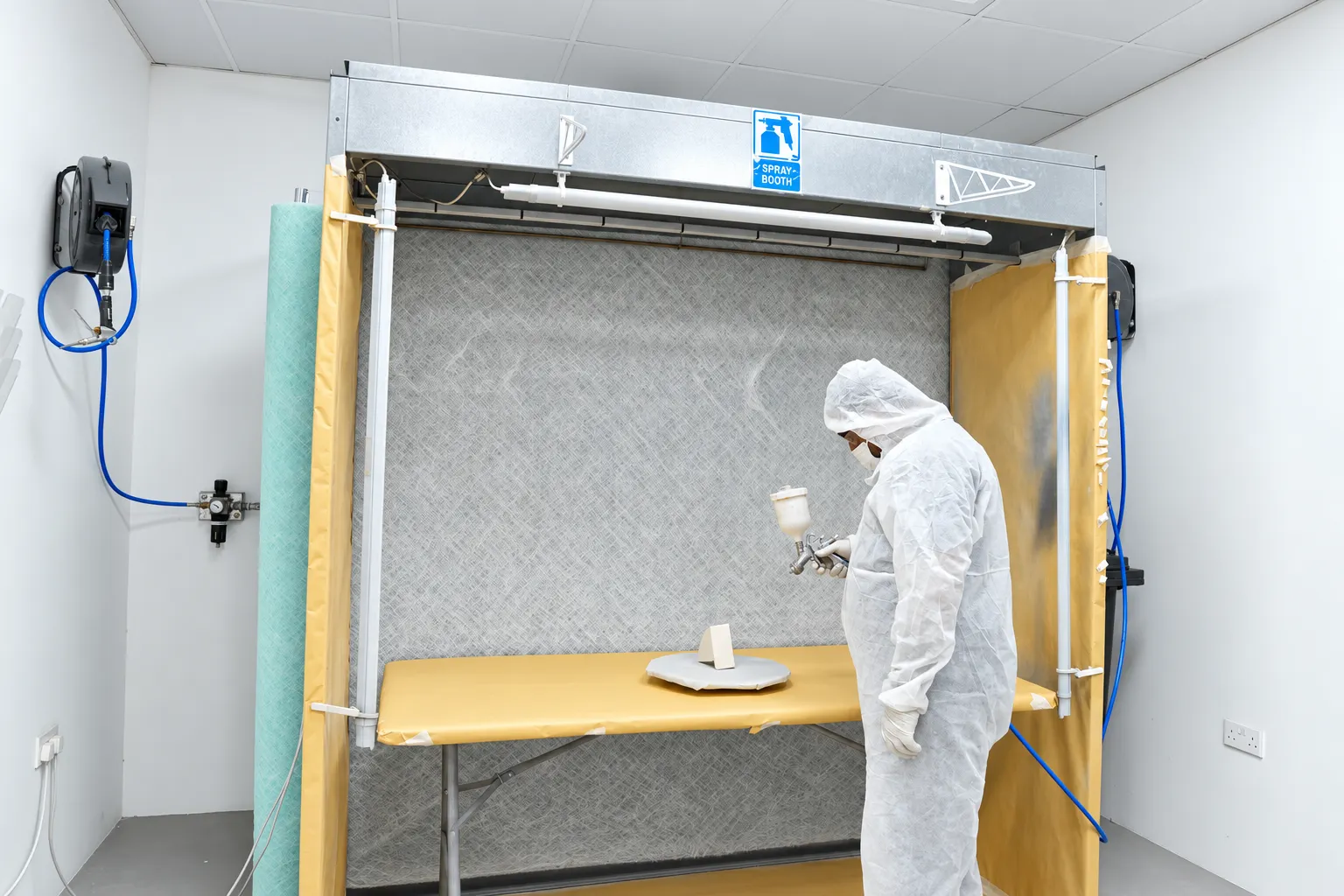
Sealing faces, bores and threads decide whether a part goes back into service. We plan them into the build, not after it.
Tell us what the part must do and how it will be accepted. Pressure-containing, safety-critical or hazardous-area parts need their qualification and approval route defined at the start.
Testing, documentation and approval scope are confirmed per order.
Anything else? See all FAQs
We can assess valve trim and other internal components from drawings or existing samples. The review considers flow geometry, mating interfaces, operating conditions and the finishing needed before assembly and testing.
Metal printing offers a production route for intricate passages and cage geometries that can be difficult to manufacture conventionally. We work from your design and coordinate manufacturing requirements with your valve specialist or engineering consultant.
We assess components such as impellers for reverse engineering and manufacture. Hydraulic geometry, shaft interfaces, material requirements and subsequent machining, balancing and testing are defined with the party responsible for the refurbishment.
Yes. A polymer model can help check assembly clearances, installation access and fit during valve or pump overhaul. This provides an opportunity to resolve dimensional issues before metal production.
These enquiries require the specified material grade, process conditions and acceptance criteria. We review whether the proposed manufacturing route can meet those requirements before confirming scope; alloy availability alone does not establish service suitability.
Send a drawing, a CAD file, or photographs and the old part. Tell us what it does, how many you need and when.