



Materials library.Polymers and alloys.
Search every material we print by name, process or property. Open any entry for its typical uses, the systems that run it and the manufacturer datasheet.
Start with the requirement.We'll match the material.
Pick the requirement that matters most and the library narrows to the materials built for it.
Search the library.Open any material.
Try a material name, a property or a printer, such as ULTEM, flame, titanium or F900.
38 of 38 materials shown
Showing
No materials match your search. Try a material name, a property or a printer model.
Listed materials are manufacturer references from Stratasys, EOS and Eplus3D. Grade availability is confirmed per order.
Three processes,one library.
Each material is matched to the systems that run it in Jebel Ali. If you are unsure which process fits, describe the part and we recommend one.
FDM thermoplastics
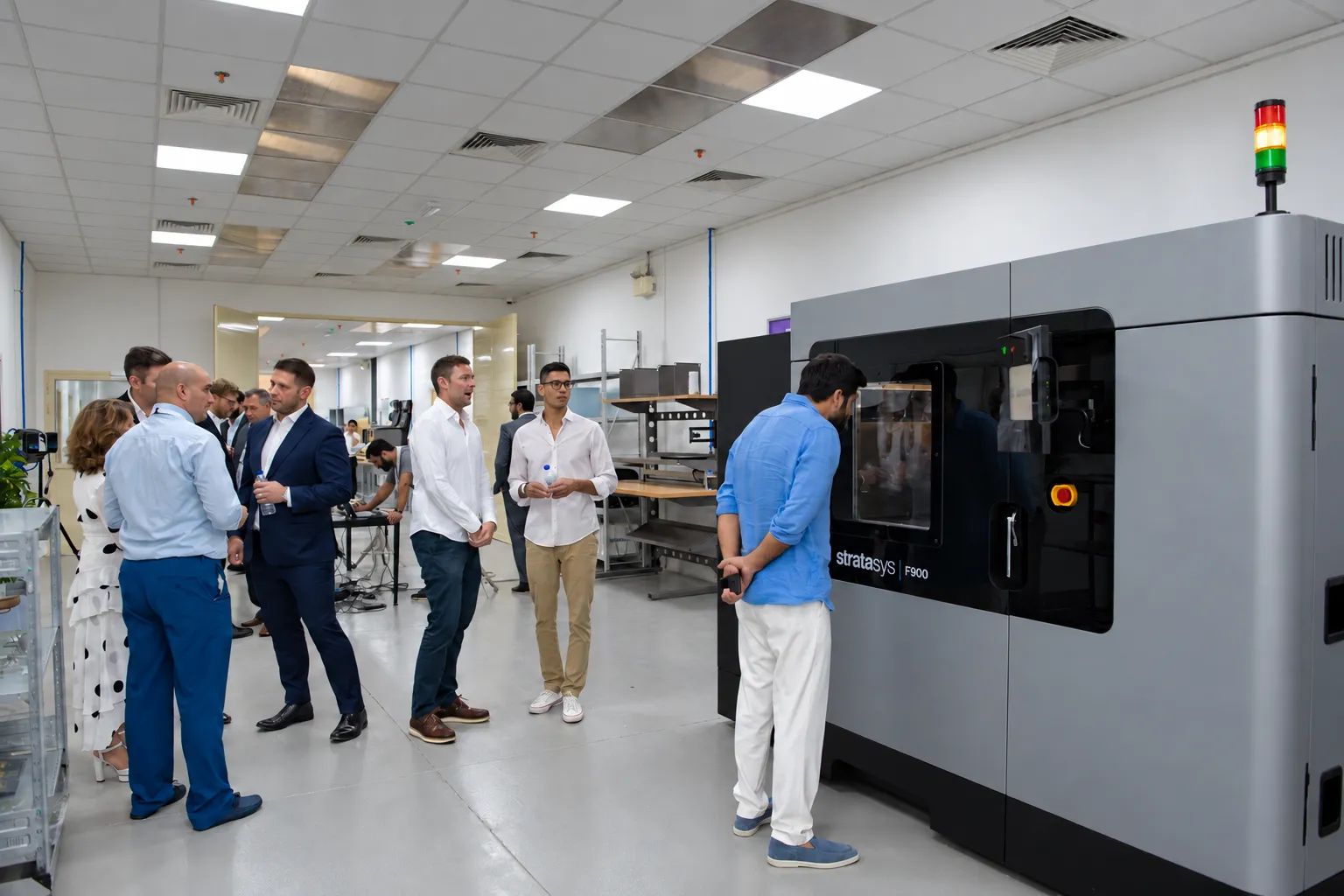
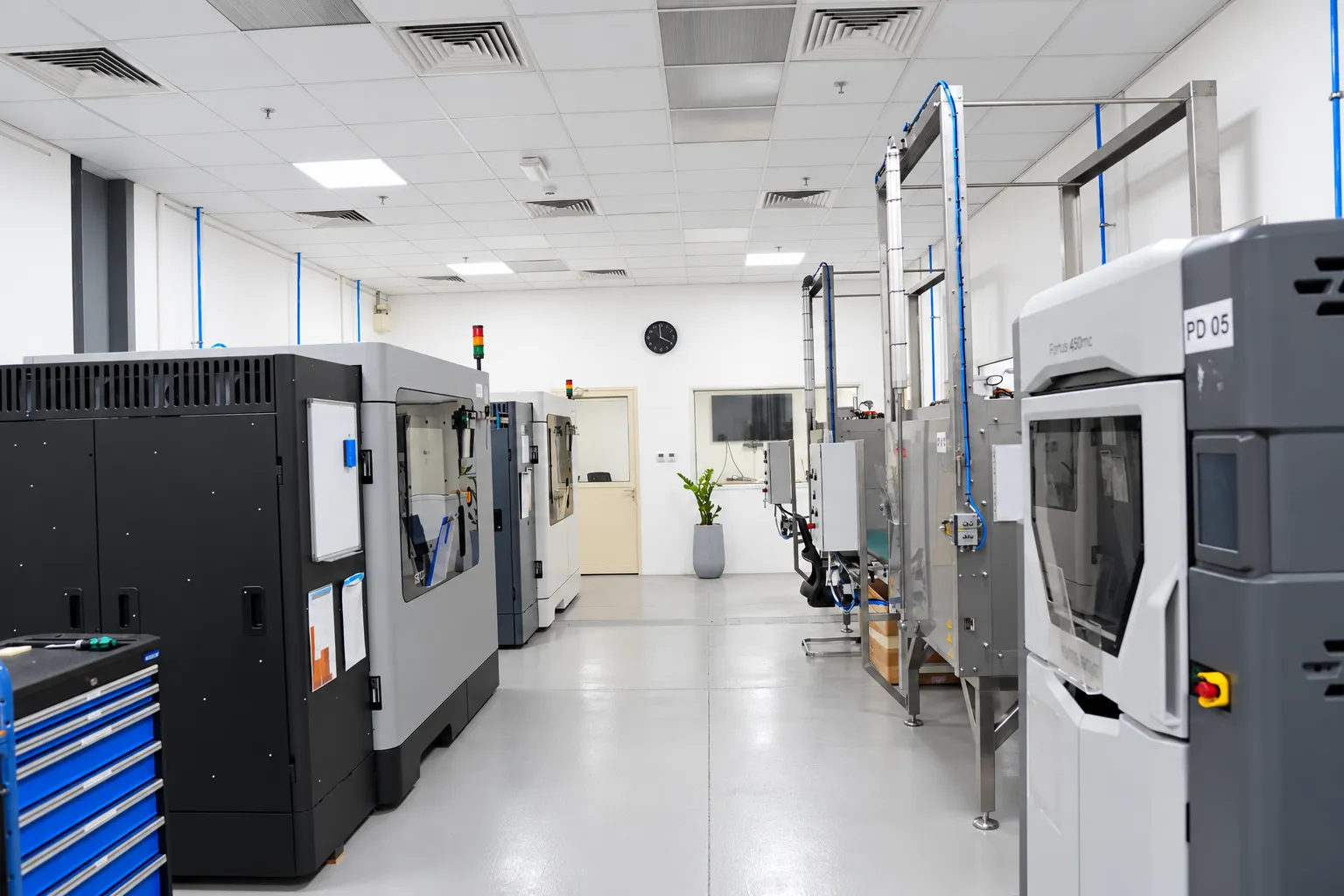
Engineering filaments from ABS and ASA to ULTEM™ and Antero™, printed on the Stratasys F900 and Fortus 450mc.
About FDM printingSLS polymer powders
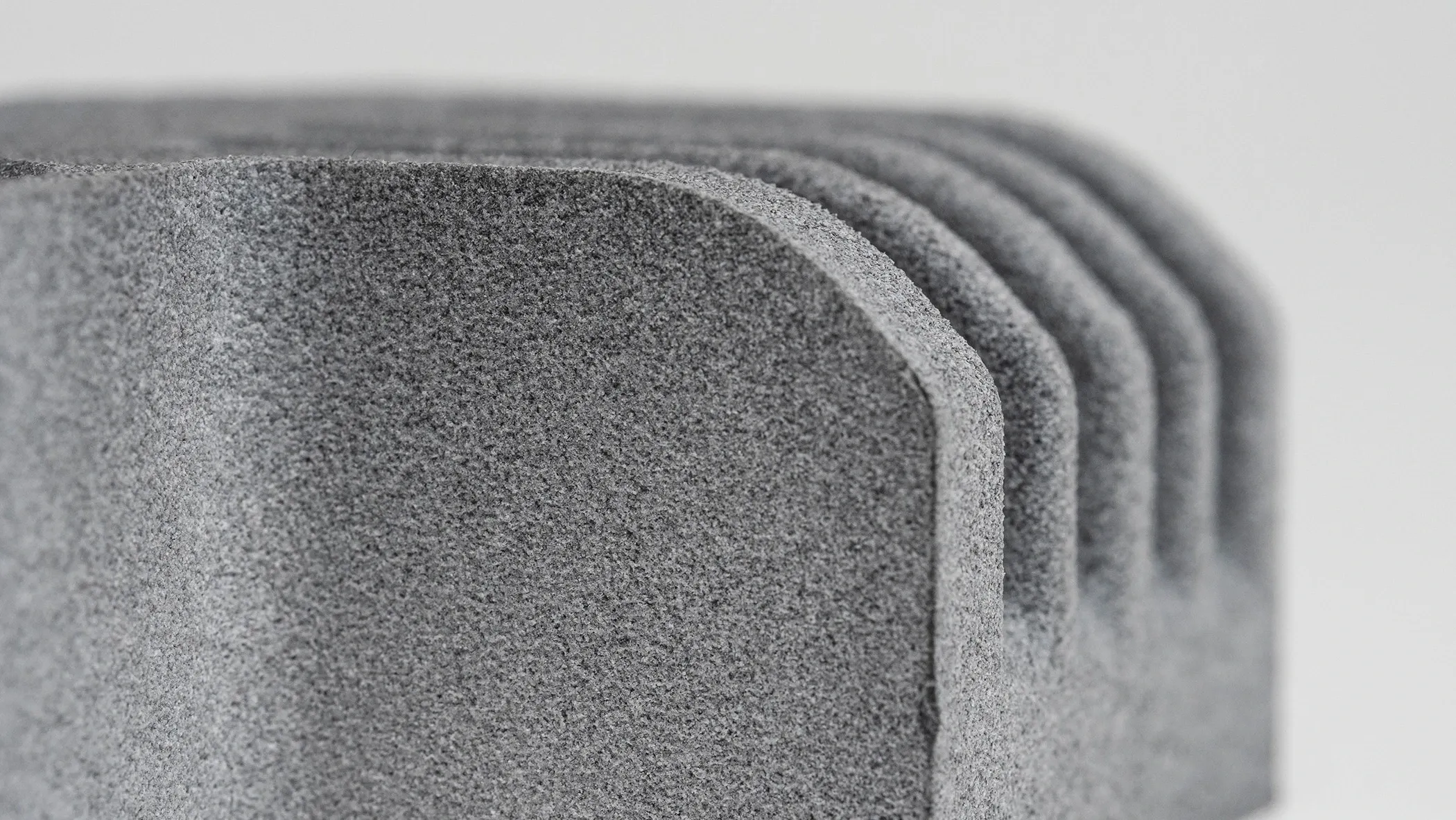
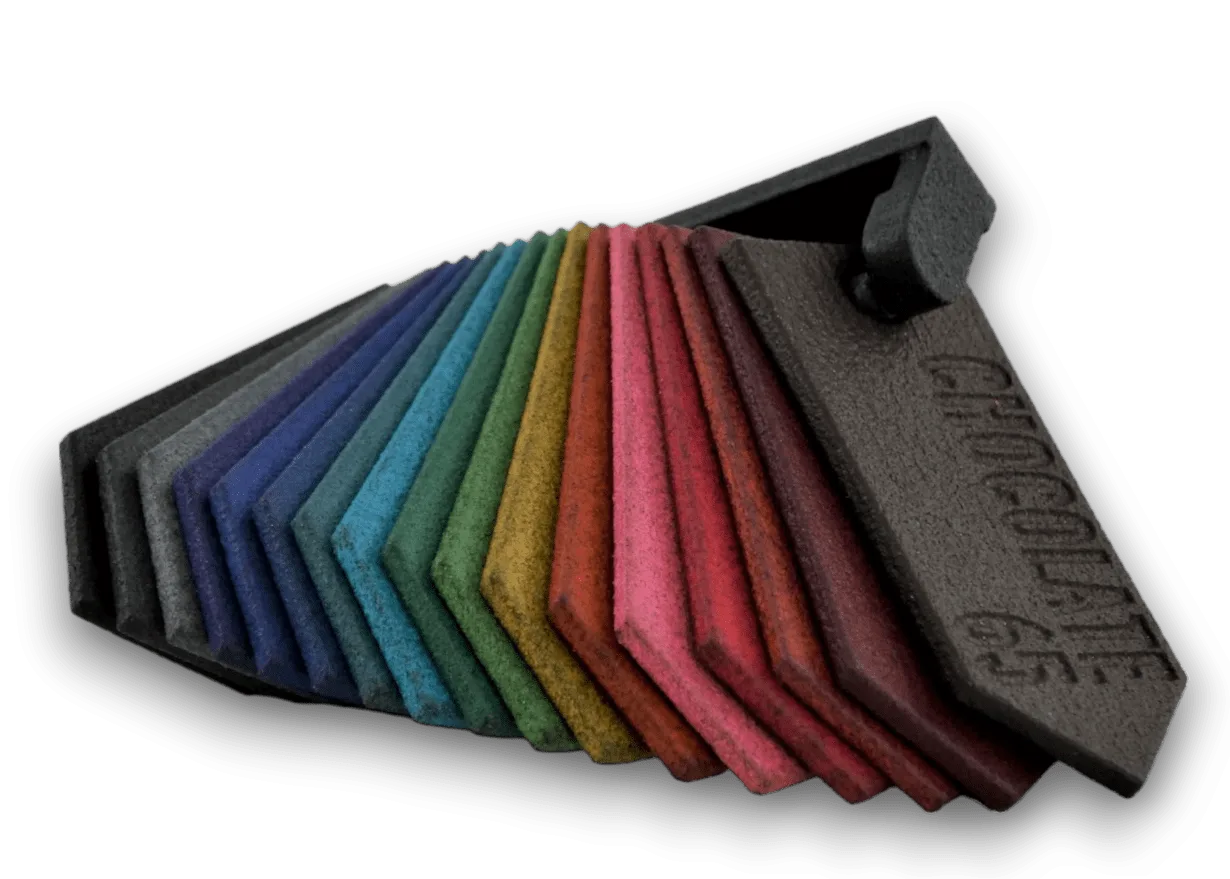
PA 11 and PA 12 grades with flame-retardant, glass-filled and flexible options, sintered on the EOS P 396.
About SLS printingMetal LPBF alloys
Titanium, aluminium, nickel, cobalt chrome, maraging steel, stainless steel and copper alloys on the Eplus3D EP-M300.
About metal printing
Already have a materialspecification?
Send it with the part data. If the material is still open, describe the operating conditions and we recommend the options.
- The specification or grade called up on your drawing.
- Operating temperature and any chemical, fuel or UV exposure.
- Loads and fits, including mating parts and fasteners.
- Flame, smoke or ESD requirements and the test data you need.
Material questionsbuyers ask us.
Anything else? See all FAQs
I don't know which material I need. Where do I start?
Tell us what the part does, the temperatures and loads it sees, and any chemical, flame or appearance requirement. An engineer recommends the material and process with your quote.
How do FDM, SLS and metal materials differ?
FDM uses engineering thermoplastic filament, including ULTEM™ and PEKK. SLS uses nylon-based powders for complex, support-free parts. Metal LPBF uses alloy powders for dense metal parts. See FDM, SLS and metal printing.
Which materials suit aircraft cabin parts?
ULTEM™ 9085 on FDM, and PA 2210 FR or PA 2241 FR on SLS, are the usual starting points. A material alone does not approve a part; the part, its processing and its release route are defined together.
Where does the material data come from?
Each entry links to the manufacturer's datasheet from Stratasys, EOS or Eplus3D. Finished-part properties also depend on build orientation, process parameters and post-processing.
Can you work to a material named on my drawing?
Yes. Send the drawing and specification, and we tell you which listed material meets it or what the closest route is.
Do you print metal parts?
Yes. Our Eplus3D EP-M300 prints 7 alloy families, including stainless steel, titanium, aluminium and nickel alloys, within a 300 × 300 × 450 mm build volume.
Bring us the part.
Send a drawing, a CAD file, or photographs and the old part. Tell us what it does, how many you need and when.