
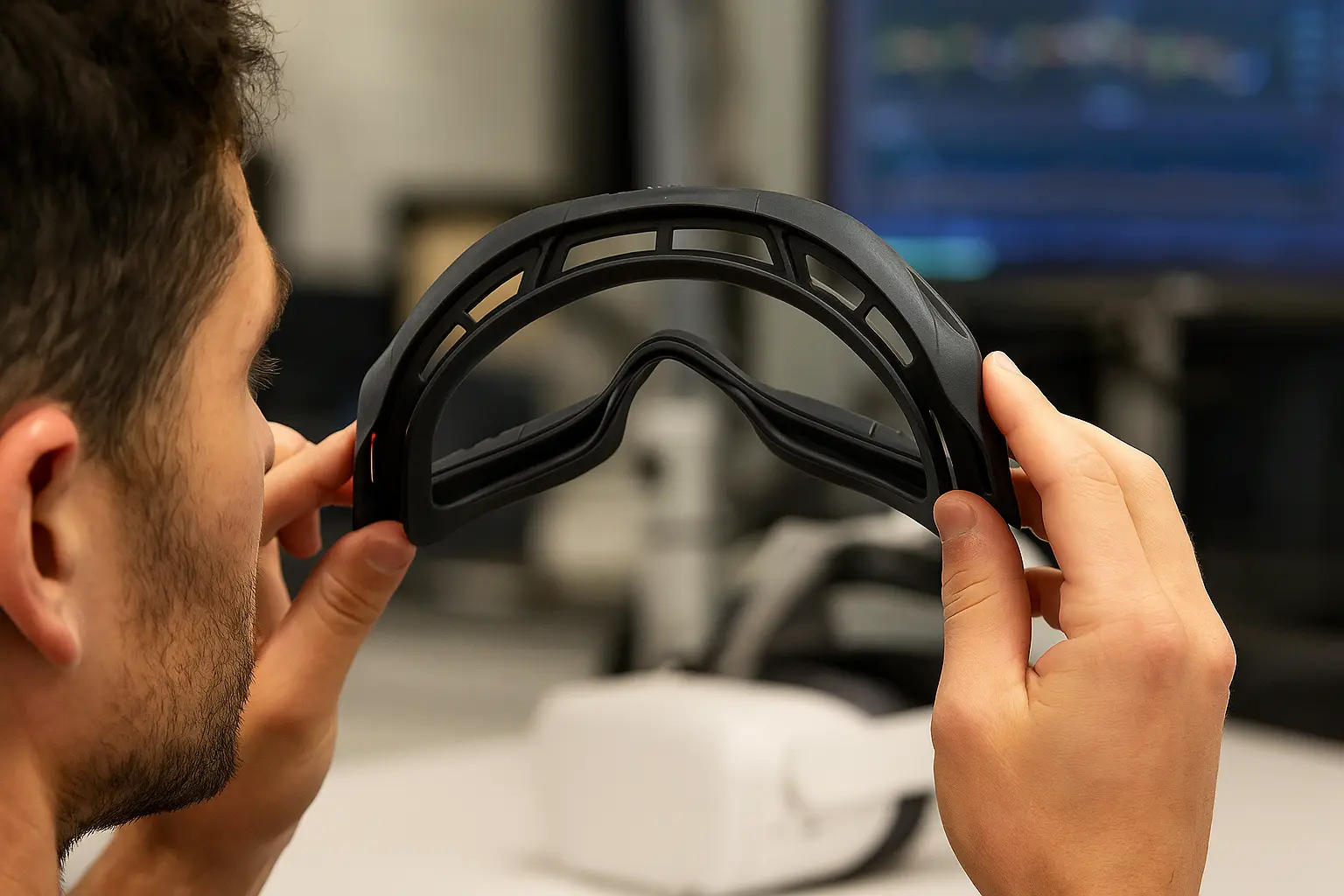
Functional housings and frames
Enclosures with integrated clips, bosses and mounting features in one piece.
Industries
Parts and tooling for sectors where downtime is expensive and paperwork matters.
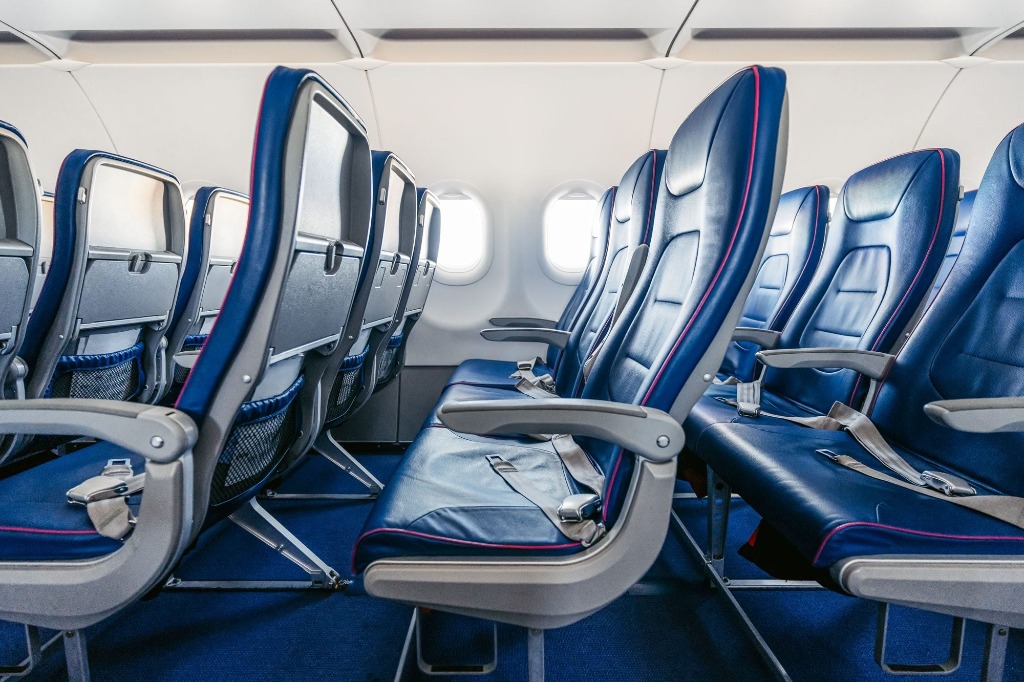
All industries AviationCabin interior parts released with EASA Form 1.
 MaritimeReplacement parts and tooling that keep vessels running.
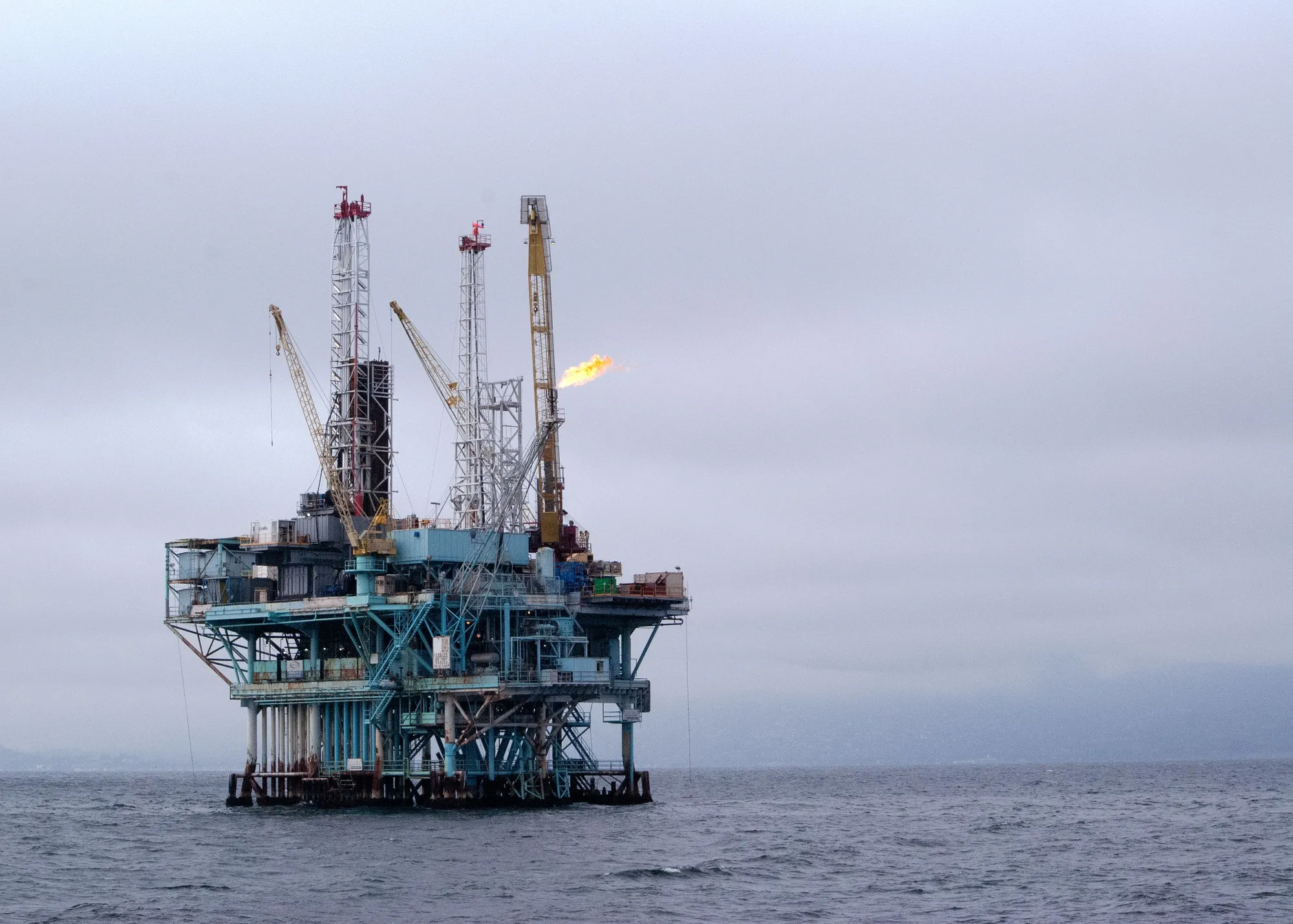 Oil & GasObsolete components rebuilt in polymer and metal.
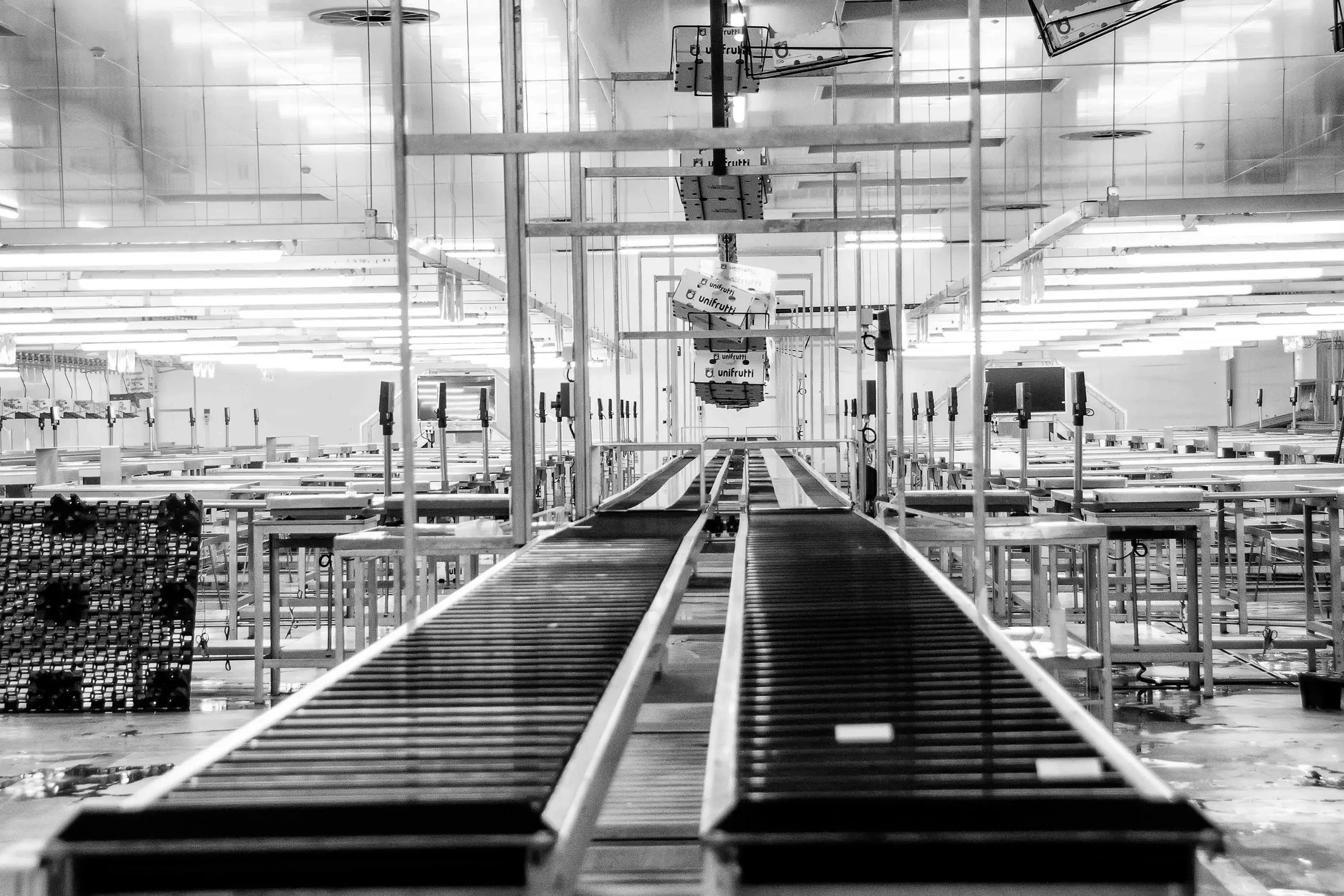 Industrial ManufacturingJigs, fixtures and end-use parts for the factory floor.
 Aerospace & DefenceControlled, local manufacture for sensitive programmes.
Company
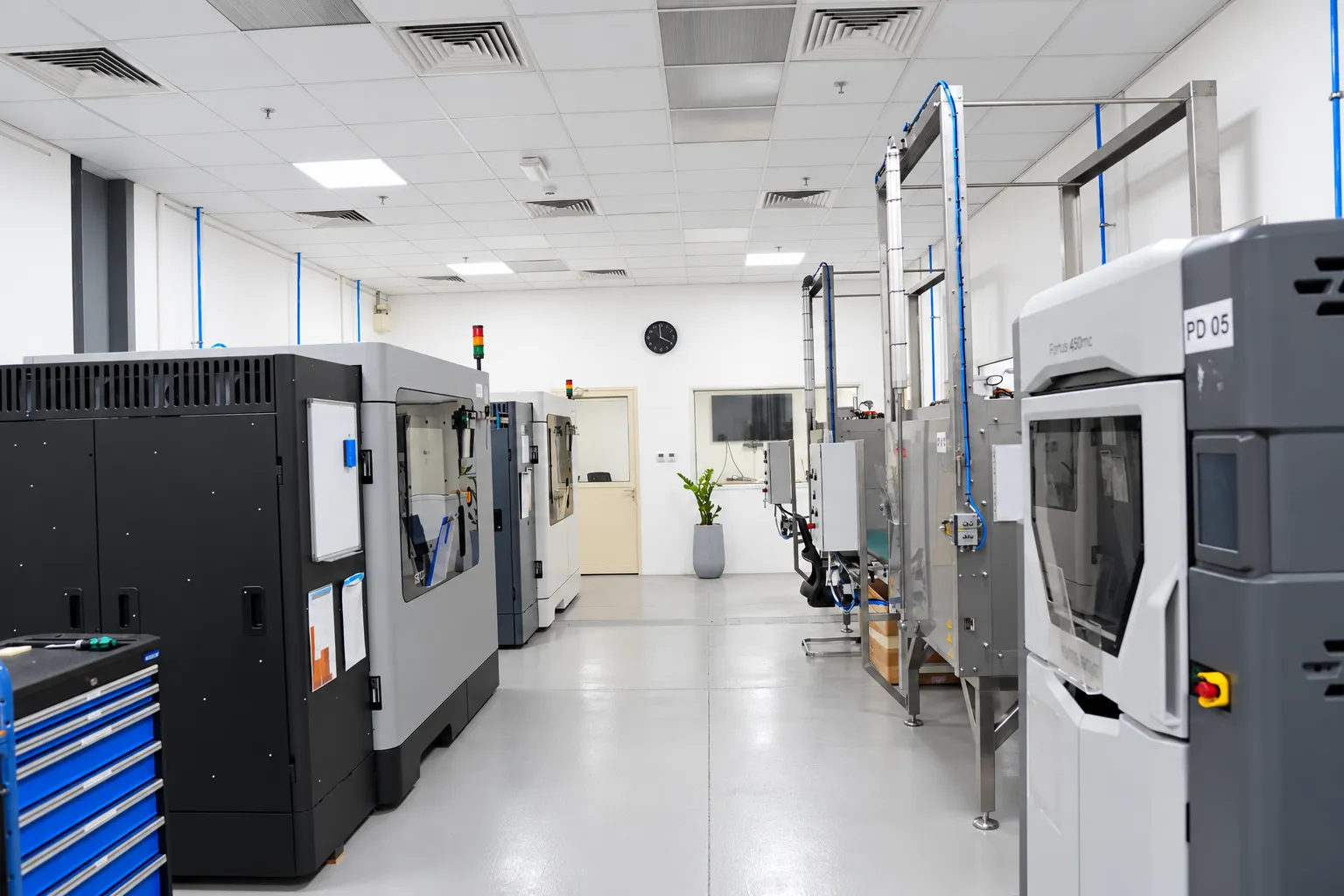
A 10,750 sq ft additive manufacturing facility in Jebel Ali, Dubai, since 2023.
About Paradigm 3D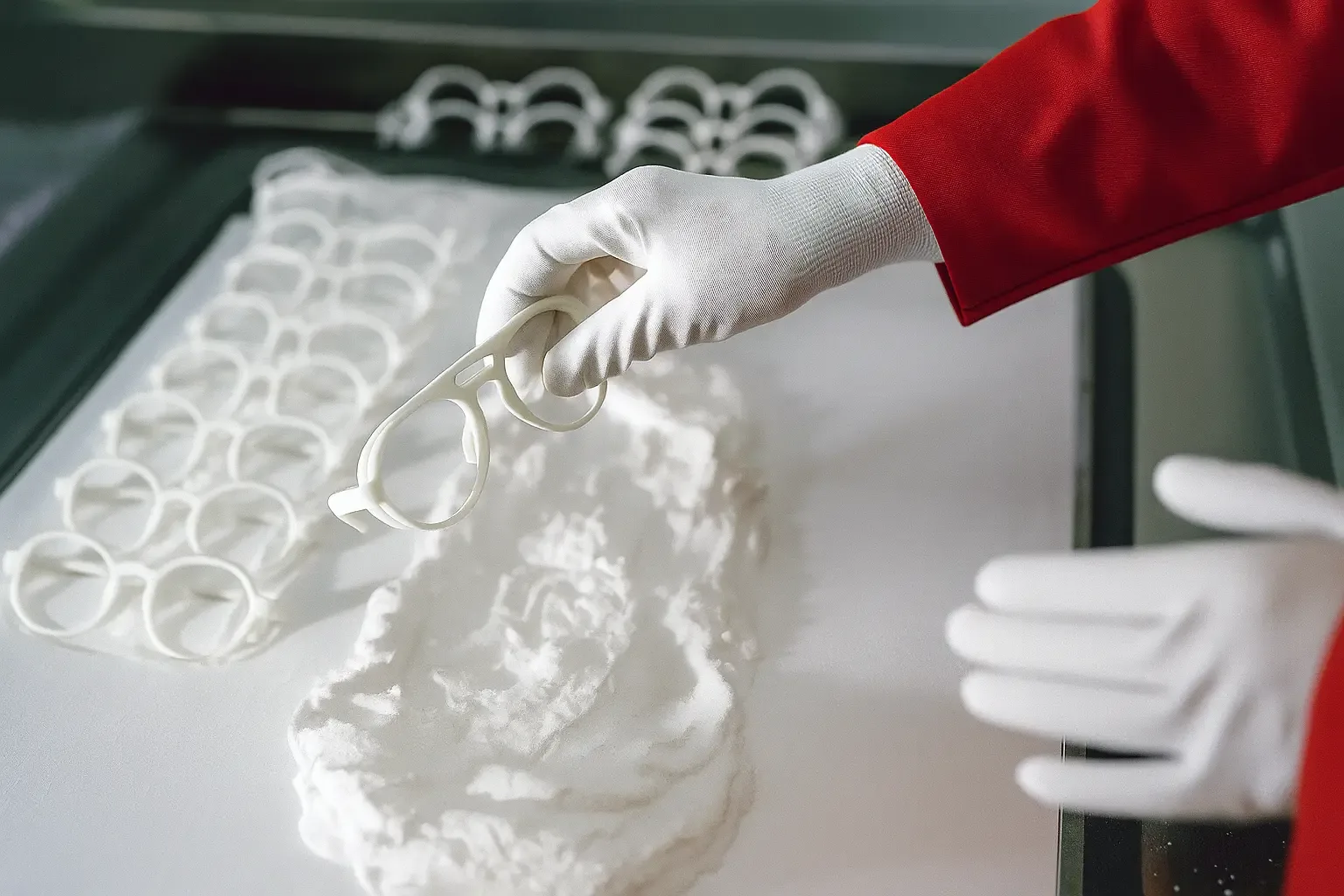
Selective laser sintering on an EOS P 396 in Jebel Ali. The powder supports every part as it builds, so internal channels, clips and full batches come out of one run.
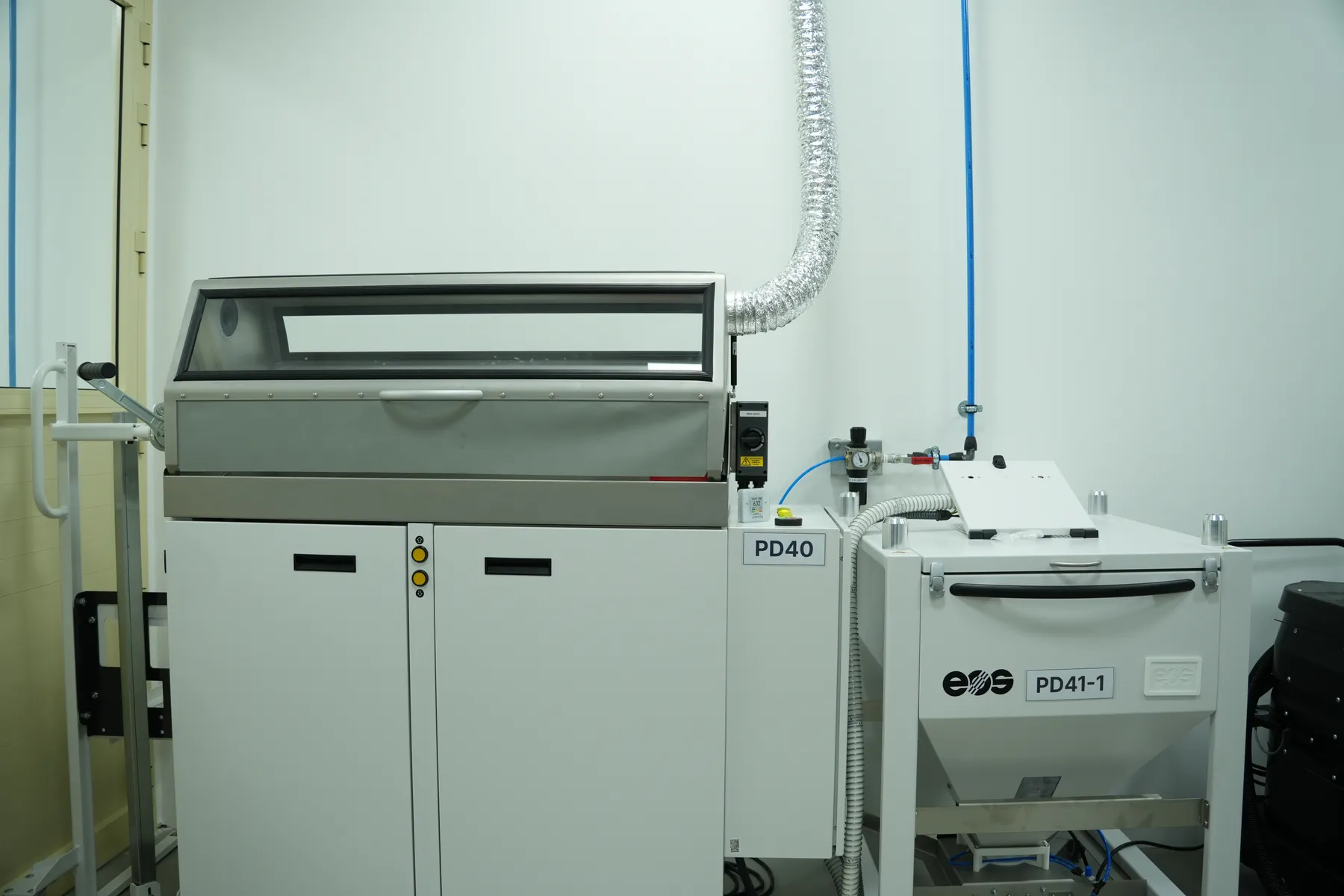
A laser fuses thin layers of nylon powder inside a heated chamber. The unfused powder holds each part in place, so no support structures are needed.
We check the geometry and arrange your parts in three dimensions to fill the build volume.
The laser selectively fuses each fresh layer of powder, building every part in the batch at once.
The build cools under control, then parts are broken out and loose powder is removed.
Surfaces are cleaned and finished as specified, then critical features are checked.
Because nothing needs support, a complex part costs much the same to build as a simple one. That makes SLS ideal for intricate parts and batches.
Enclosures with integrated clips, bosses and mounting features in one piece.
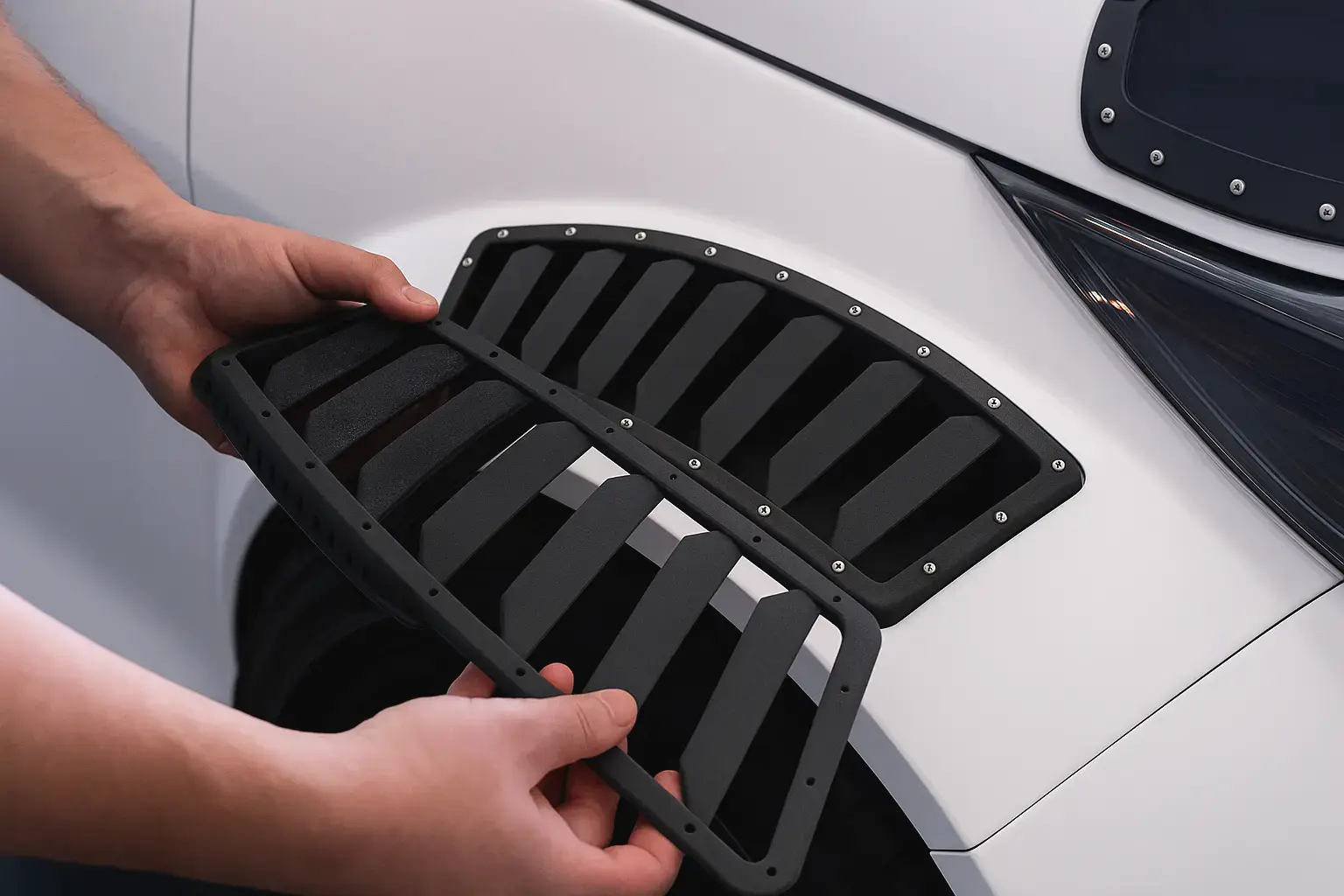
Thin-walled airflow parts and internal passages with no supports to remove.

PA 2210 FR and PA 2241 FR for transportation and cabin interior components.
PA 2241 FR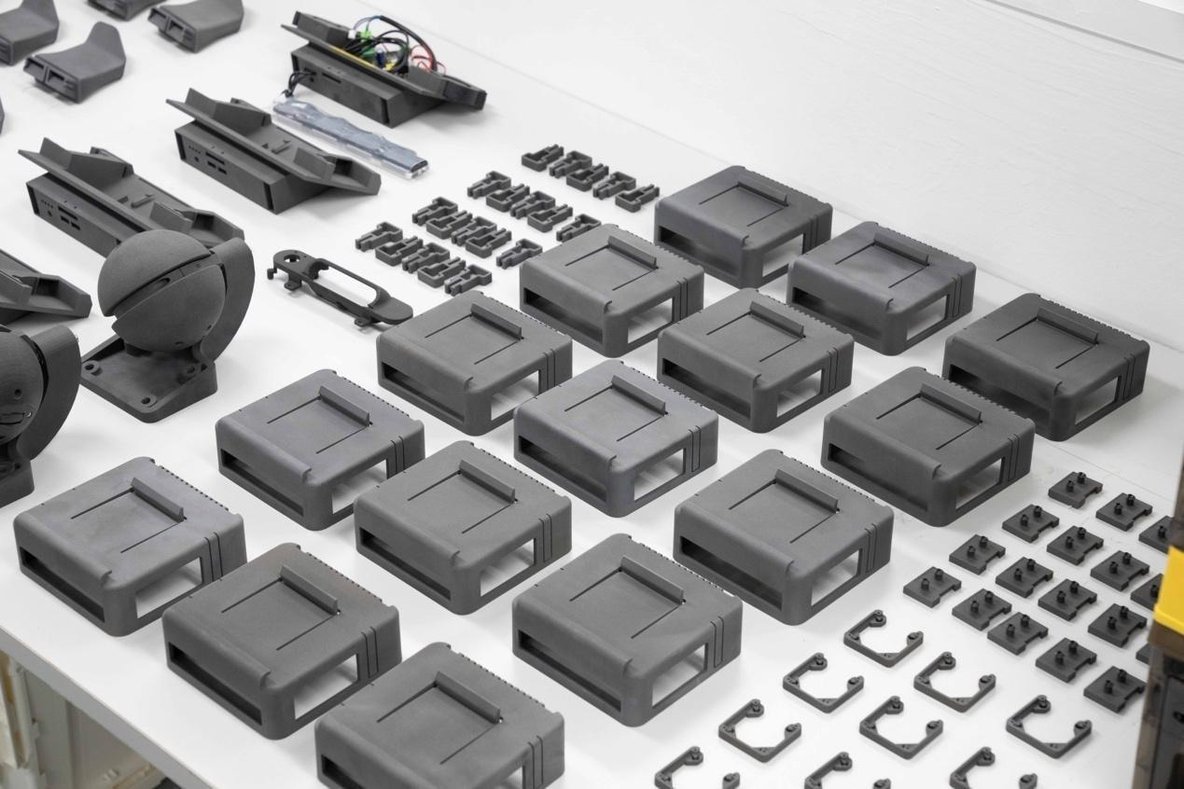
Dozens of parts nested in one build for low-volume production and repeat orders.
We recommend the process that suits the part. Here is how SLS compares with our FDM and metal systems.
| Compare | SLS | FDM | Metal LPBF |
|---|---|---|---|
| Largest envelope | 340 × 340 × 600 mm (EOS P 396) | 914 × 610 × 914 mm (F900) | 300 × 300 × 450 mm (EP-M300) |
| Layer thickness | 0.06–0.18 mm | 0.127–0.508 mm | 20–120 μm |
| Materials | 13 polyamide, flame-retardant, filled and flexible powders | 18 engineering thermoplastics, including ULTEM™, PC, ASA and PEKK | 7 alloy families, from stainless steel to titanium and nickel |
| As-built surface | Fine, matte texture | Visible layer lines | Textured metal; critical faces often machined |
| Supports | None; the powder supports the part | Support material under overhangs | Supports and a build plate, removed after the build |
| Strength | Tough nylon parts with complex geometry | Tough thermoplastic parts, strongest along the layers | Fully dense metal parts |
| Typical uses | Ducting, housings, clips and serial batches | Cabin interior parts, large housings, jigs and fixtures | Valve internals, manifolds, impellers and brackets |
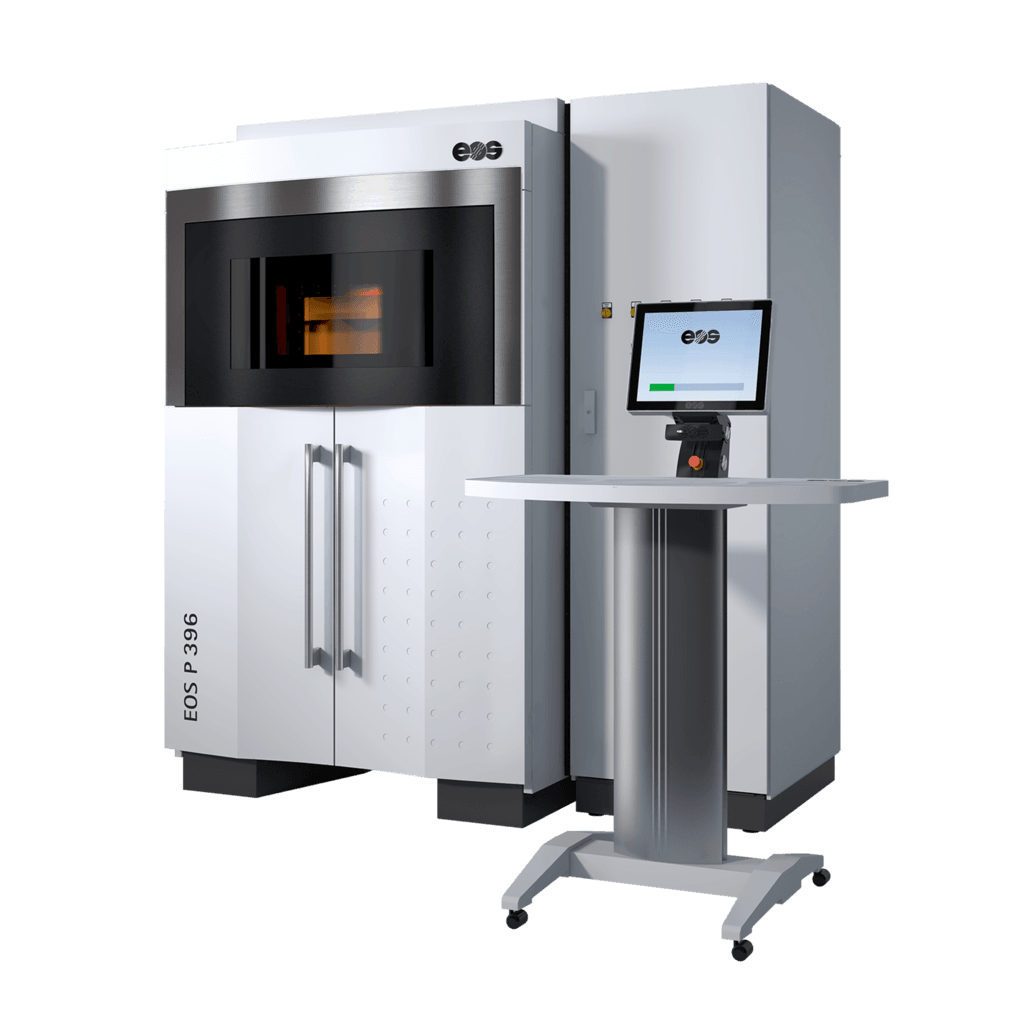
An industrial powder-bed system built for repeatable nylon production, from single parts to full batches.
Everyday PA12, tough PA11, glass-filled, flame-retardant and flexible grades. Open any material for its manufacturer data and typical uses.
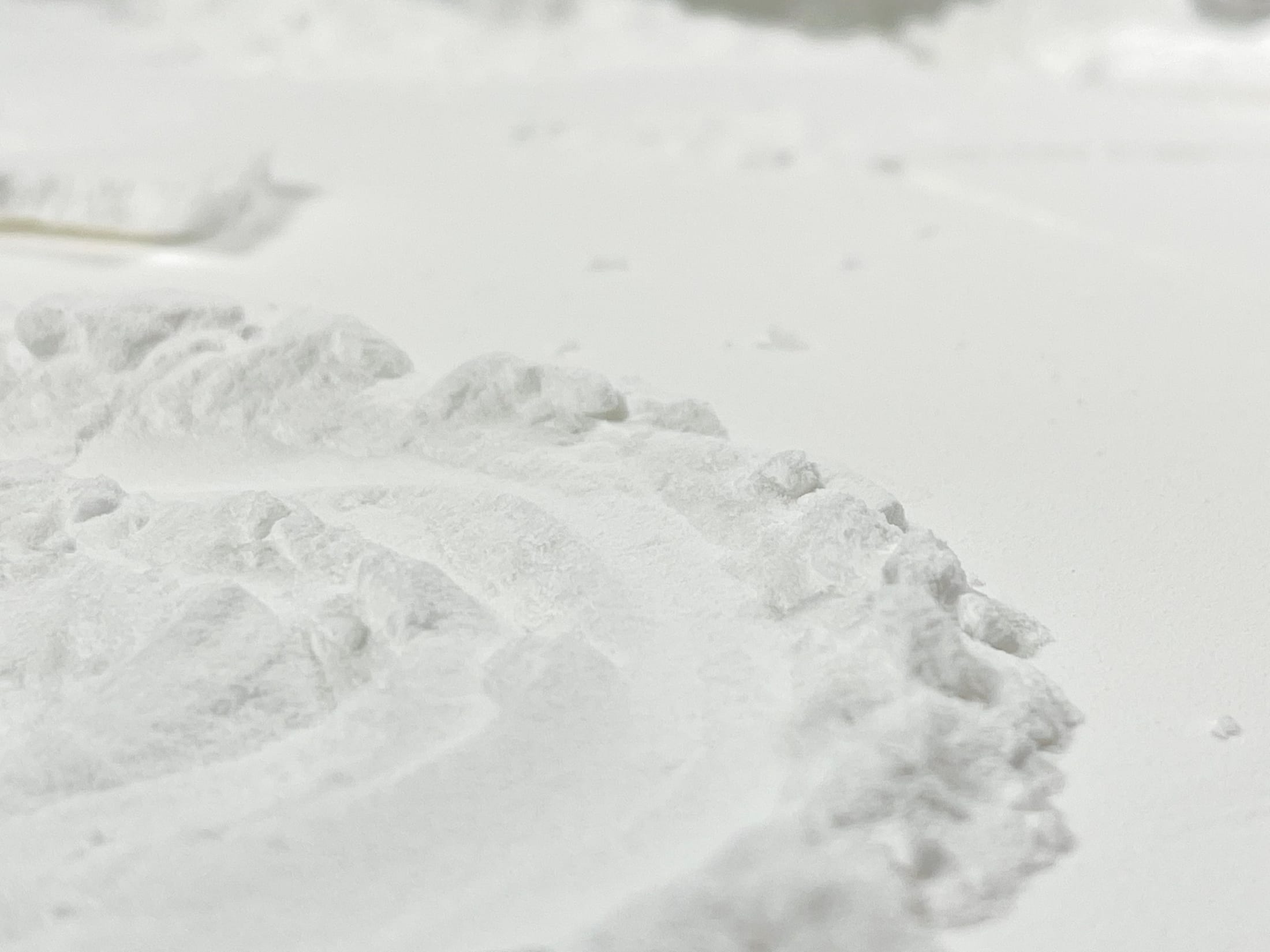
Housings, clips and spare parts.
Snap-fit and impact-loaded components.
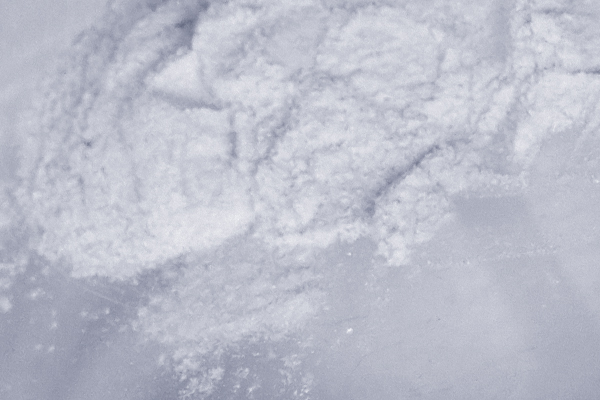
Machine housings and tools.

Transportation and electronics components.

Transportation parts and housings.

Flexible interfaces and lattices.

Display and functional components.

Housings and functional models.
Listed materials are manufacturer references. Grade availability is confirmed per order.
Send the CAD as it is. These are the points our engineers check first, and where a small change makes a better SLS part.
Hollow sections and channels need openings so loose powder can be removed after the build.
Minimum wall and feature sizes depend on the powder grade. We review them against your geometry before quoting.
Hinges and mating parts printed together need enough gap for the powder to clear between them.
Large flat areas and heavy sections can distort as the build cools. Ribs and even wall thickness help.
Several designs can share one build. Tell us quantities up front and we plan the nest to suit.
The EOS P 396 range is 0.06–0.18 mm, depending on material. Finer layers add detail; thicker layers build faster.

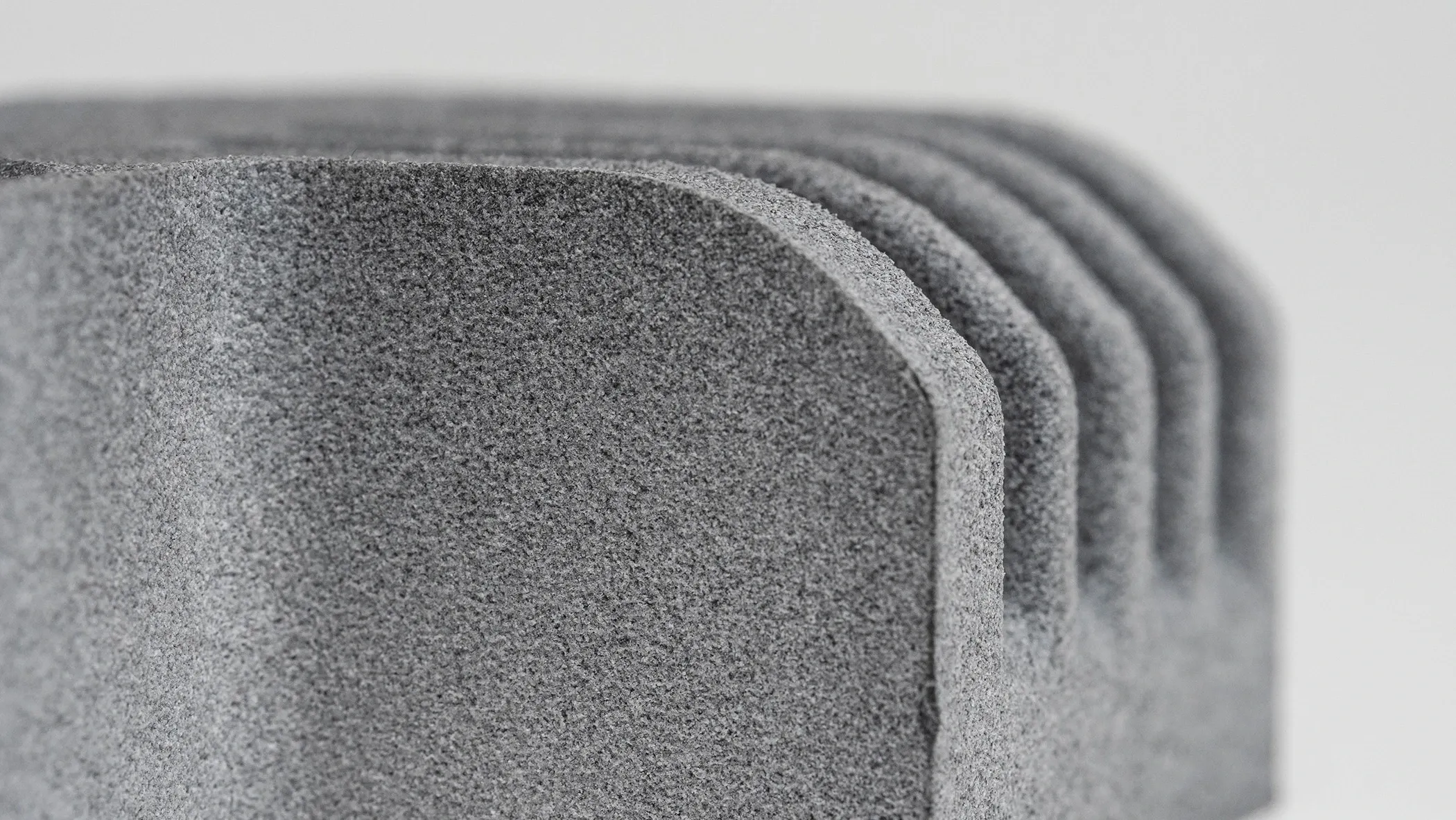
SLS parts come out with a fine, matte texture. After powder removal we clean and finish them to the look and fit the part needs.
Anything else? See all FAQs
No printed supports are needed, because the surrounding powder holds the part during the build. Access for powder removal is still essential.
Yes, as long as loose powder can be removed. Fully sealed cavities and passages with no access need a design change, which we suggest at quotation.
Not on their own. A material designation does not approve a part. Paradigm 3D manufactures eligible aviation parts under a production arrangement with The Aviation AM Centre, the EASA Part 21G approval holder, which issues EASA Form 1 for parts supplied through that approved route.
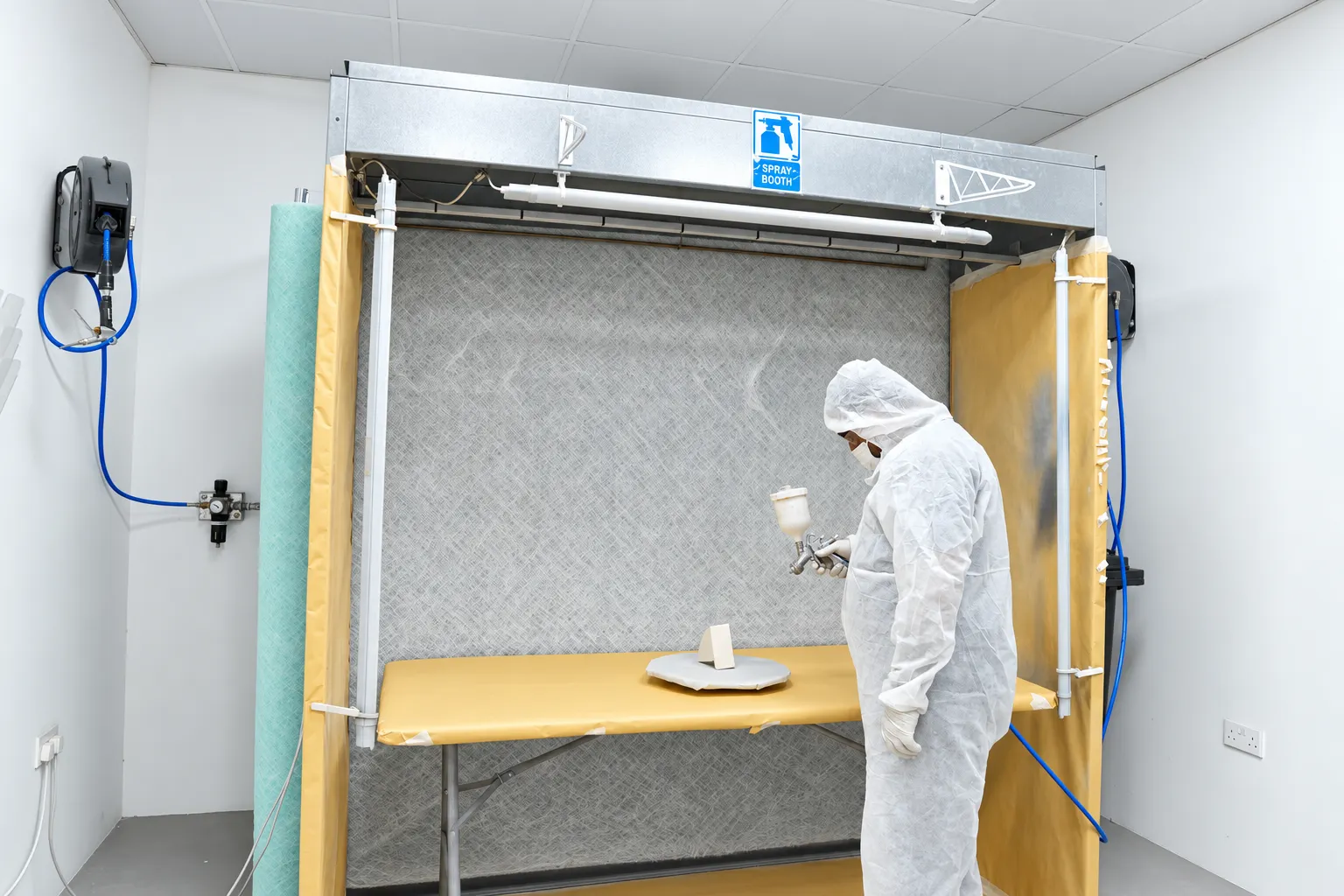
A fine, matte texture in the natural colour of the powder. Cleaning, surface preparation and paint are reviewed against the polymer and the appearance you need.
It depends on part size and how well they nest in the 340 × 340 × 600 mm volume. Send quantities with your files and we plan the build around them.
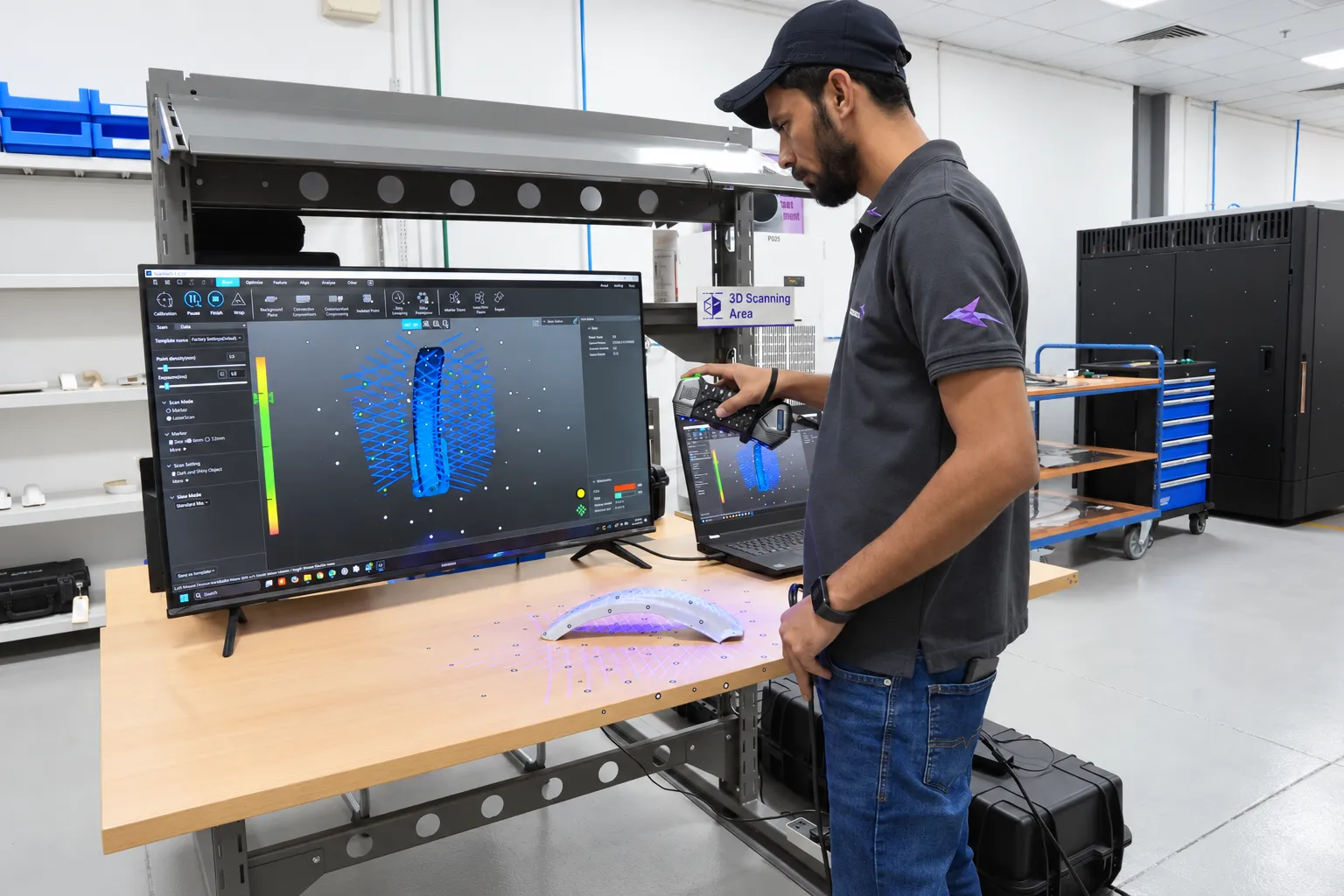
STEP or STL for 3D data and a PDF drawing for critical dimensions. If you only have the old part or photos, we can scan and model it.
Send a drawing, a CAD file, or photographs and the old part. Tell us what it does, how many you need and when.